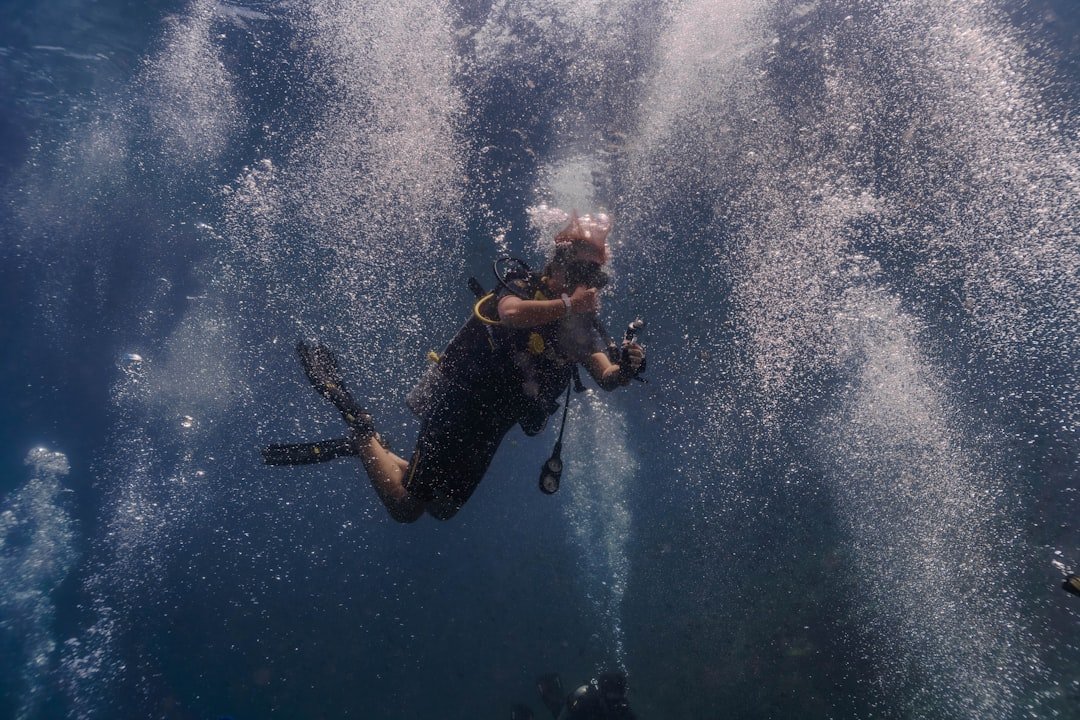
Mastering how to equalize ears while diving separates divers who enjoy every descent from those who abandon trips at 15 feet. Ear equalization isn’t complicated, but most divers learn it wrong and suffer for years. The good news: once you understand the mechanics and practice step-by-step tips for descent comfort, you’ll equalize effortlessly on every dive.
Why Ear Equalization Matters More Than You Think
Your ear canal contains air. As water pressure increases during descent, that air compresses and creates a vacuum. Your eustachian tube—a narrow passage connecting your middle ear to your throat—must open to let fresh air in and equalize the pressure on both sides of your eardrum. You’d think holding your nose and blowing gently would do the trick. It usually doesn’t work because most divers wait too long to equalize.
Barotrauma happens fast. I’ve been diving with groups where a single delayed equalization caused permanent hearing damage in one ear. Pain during descent? That’s your body screaming a warning. Most people don’t realize that even mild discomfort means tissue inside your ear is already being stressed.
| Equalization Method | Best For | Difficulty Level | When to Learn |
|---|---|---|---|
| Valsalva Maneuver | Beginners, shallow dives | Easy | First certification dive |
| Toynbee Technique | Divers with sinus issues | Moderate | After mastering Valsalva |
| Frenzel Maneuver | Deep technical dives, repetitive descents | Hard | After 50+ logged dives |
| Lowrance Technique | Emergency backup when others fail | Moderate to hard | Advanced training course |
Pre-Dive Checklist: Set Yourself Up for Success
How to equalize ears while diving starts before you enter the water. Preparation determines whether your descent feels smooth or becomes a fight.
- Clear your sinuses 30 minutes before diving using saline rinse or steam inhalation
- Avoid alcohol and heavy meals 12 hours prior—dehydration makes equalization harder
- Test your equalization technique on dry land: pinch your nose, close your mouth, and gently blow until you feel your ears pop
- Do not dive if you have active congestion, a cold, or ear infection of any kind
- Wear a hood that fits snugly around your ears without crushing them
- Know which equalization method works best for your ears before your dive day arrives
The Complete Step-by-Step Process: How to Equalize Ears While Diving
This section walks you through exactly what to do from the moment you enter the water to when you reach your target depth. Follow this sequence without skipping steps.
Condition: You’re Descending on a Recreational Dive
You’ve completed your safety check at the surface, received the descent signal from your dive leader, and begun sinking toward your first depth milestone. You have roughly 30 seconds before pressure changes become noticeable inside your middle ear.
Audience: Recreational Divers New to Equalization
This approach works for divers certified within the last two years or those who’ve never felt confident equalizing. Advanced divers should adapt as needed.
Method: Preventive Equalization During Descent
The core principle is simple: equalize before you feel pressure building. Most divers equalize only when pain forces them to, which is too late. Instead, start equalizing immediately and repeat every one to two feet of descent.
- At the surface, before descending, perform one practice equalization to confirm your chosen method works today
- Begin your descent slowly—never descend faster than the smallest bubble rising from your regulator
- Within the first few seconds of sinking, pinch your nose closed through your wetsuit or hood and gently blow air into your closed nasal passages
- You’ll feel a subtle pop or click inside your ear—that’s the eustachian tube opening and pressure equalizing
- Release your nose and descend another 1 to 2 feet, then repeat the entire sequence
- If you feel resistance or mild discomfort, stop descending immediately and equalize again without pushing harder
- Continue this rhythm all the way to depth—equalization during descent is far easier than fighting pressure buildup partway down
- At your target depth, perform one final equalization to confirm everything feels clear
Warnings: What Stops Most Divers From Getting This Right
Here’s where most divers give up. You’ll descend past 10 feet, feel nothing, assume you’ve equalized perfectly, and keep sinking. Then at 20 feet, pain hits suddenly. This is the part that actually matters: descent comfort depends on equalization happening constantly, not once at the start. Never blow hard through your nose during equalization. Gentle pressure only. Aggressive blowing can rupture your round window or push water through your eustachian tube into your middle ear, causing reverse block—a condition that hurts far worse than normal barotrauma and takes weeks to heal.
Mastering Step-by-Step Tips for Descent Comfort
Beyond basic technique, these specific adjustments solve real problems divers encounter underwater.
Congestion during descent destroys equalization. I’ve been diving with this challenge for years, and the only real fix is aggressive pre-dive sinus prep. If you wake up on dive day with any nasal pressure, seriously consider rescheduling. Your ears will thank you more than your pride will forgive you for pushing through.
Adjust your head position during descent. Tilt your head slightly to one side if one ear refuses to equalize. Move your jaw side to side, swallow repeatedly, or do very gentle neck rotations. Sometimes your eustachian tube gets stuck in a position that blocks air flow, and a simple body angle change frees it instantly.
Descend feet-first whenever possible. Head-down descent increases pressure on your sinuses and makes equalization harder. Feet-first descent lets gravity work with your eustachian tube and makes how to equalize ears while diving feel nearly automatic once you’re comfortable with the technique.
Switch methods if one stops working mid-dive. You might start with Valsalva and discover Toynbee works better as you go deeper. That’s normal. Equalization is flexible—your job is finding what works in the moment, not forcing a single approach.
Troubleshooting: When Equalization Isn’t Working
Some days your ears simply won’t cooperate. This section diagnoses why and what to do about it.
Reverse block means you equalized fine going down but can’t release pressure during ascent. This happens when mucus blocks your eustachian tube on the way up. Prevent it by ascending slowly, equalizing gently every few feet, and never holding air in your sinuses. If reverse block happens, stop ascending, stay at depth for a few minutes, and try equalization again. Swallowing and gentle jaw movement help release the seal.
One ear that won’t equalize usually signals inflammation, congestion, or eustachian tube dysfunction. Do not force it. Abort the dive, surface slowly, and get medical evaluation before your next dive. The temporary disappointment of missing one day underwater beats permanent hearing loss.
If you’re equalizating but still feel pressure building, you might be descending too fast. Slow down further. Pressure changes in less time than your body can adapt mean equalization will always lag behind. A controlled descent at half speed makes equalization feel effortless.
Common Mistakes That Damage Your Ears
I’ve seen so many divers hurt themselves by doing the opposite of what works. These errors are completely preventable.
Waiting until pain forces you to equalize. Descend too far without equalizing and your eardrum gets pushed inward by external pressure. Even if you equalize at that point, tissue damage has already started. Some divers develop permanent conductive hearing loss after one bad dive where they ignored pain and kept sinking. Always prioritize prevention over recovery.
Blowing so hard you hear ringing in your ears. That ringing means you’ve created excessive pressure inside your middle ear. You’ve now reversed the problem—internal pressure is too high instead of too low. This causes round window rupture and permanent dizziness. Equalization should feel gentle and subtle. If you’re hearing dramatic pops or ringing, you’re using too much force.
My Picks for This
- Cressi Paxs Head is a hood designed with reinforced padding around ear zones that stays positioned consistently during descent, making nose-pinching during equalization reliable and painless on every dive
- Mares Puck Pro Plus includes equalization alert features and descent-rate monitoring that help you slow down automatically if you’re dropping too fast for safe equalization
- Garmin Descent Mk3i displays your descent rate and depth-change pace in real time, letting you adjust your speed to match your equalization pace and prevent pressure buildup
- Shearwater Peregrine has customizable descent-rate limits and auto-warning features that prevent the fast drops that sabotage equalization timing and cause barotrauma
- Zeagle Scope Dual Lens Mask sits flush against your face without gaps, letting you pinch your nose securely through the mask skirt during descent equalization without breaking your seal
Frequently Asked Questions (FAQ)
Q1. Do I need special equipment to equalize my ears during diving?
No. Equalization is a body skill, not an equipment skill. Your nose, throat, and eustachian tube do all the work. A properly fitting mask that lets you pinch your nose helps, and a hood that keeps your ears positioned consistently matters, but no special gear is required. Most divers equalize successfully with only their basic wetsuit and standard mask.
Q2. How often should I equalize while descending?
Equalize every 1 to 2 feet of descent in shallow water and every 2 to 3 feet as you go deeper. On a slow controlled descent, you should equalize 8 to 15 times reaching 30 feet. This frequency prevents pressure buildup instead of chasing it downward.
Q3. What if one ear equalized but the other won’t?
Stop descending immediately. Do not continue to depth with unequal pressure. Surface slowly, equalize gently during your ascent, and rest that ear for several hours before your next dive. If the problem persists on your next attempt, see a doctor before diving again.
Q4. Can I dive if I have mild congestion?
Do not dive with any active congestion. Mild congestion today becomes severe barotrauma underwater. The pressure change during descent will block your eustachian tube completely, and equalization becomes impossible. Wait until you’re completely clear before entering the water.
Q5. Is the Frenzel maneuver better than Valsalva for beginners?
No. Valsalva is easier to learn first because it uses your nose, which most people can pinch without thinking. Frenzel requires practice and feels unnatural initially. Master Valsalva first, then learn Frenzel as a backup method once you’re comfortable underwater.
Q6. Why does one side of my face hurt during descent even after equalization?
That pain usually means sinus pressure, not ear pressure. Saline rinse and steam inhalation before your next dive will help. If pain continues after equalization, see an ear, nose, and throat specialist to rule out structural issues that might require you to avoid diving.
This post is for informational purposes only and does not constitute professional diving instruction, medical advice, or travel guidance. Scuba diving involves inherent risks — always train with a certified instructor and consult a physician before diving. Prices, product specs, dive site conditions, operator schedules, and entry requirements are subject to change without notice. Always verify current details directly with manufacturers, retailers, dive operators, and local authorities. This site may contain affiliate links — purchases made through our links may earn us a commission at no extra cost to you.