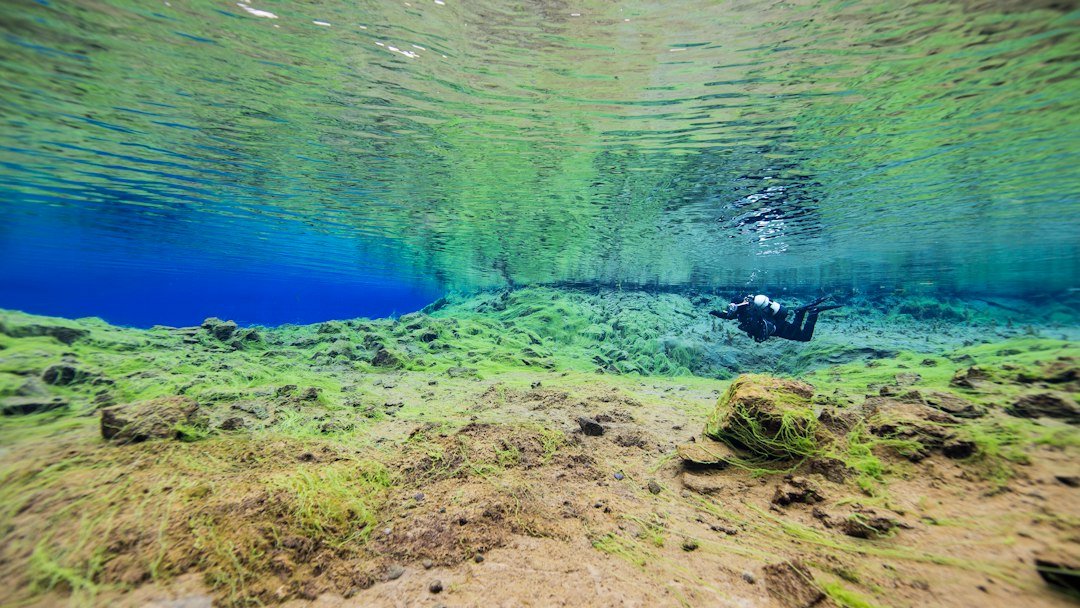
When your rental-car heater is still running, the best diving in Iceland Silfra Fissure is a booked guided drysuit dive with training and clothing suited to near-freezing water. It is very cold. The best diving in Iceland Silfra Fissure is not a deep reef dive or a wildlife-heavy excursion. It is a controlled freshwater dive through a narrow tectonic crack, where the water can look startlingly blue and the rock walls sit close enough to make every fin kick matter.
Silfra is inside Þingvellir National Park, roughly a day-trip distance from Reykjavík for many visitors. The site is known for exceptionally clear glacial water filtered through porous lava rock over a long period, though visibility depends on weather, surface disturbance, and current site conditions. Expect a short underwater route. Most divers remember the floating sensation, sharp rock detail, and the contrast between a dark drysuit and pale blue water more than the depth.
Best diving in Iceland Silfra Fissure for the right diver
Silfra suits divers who are comfortable in a drysuit, can maintain neutral buoyancy without grabbing rock, and do not mind surface preparation in cold air. It is not a casual first dive. The route is generally shallow compared with many ocean dives, but the water temperature changes the workload because cold hands, face exposure, and bulky insulation can make familiar tasks feel slower.
Most guided trips follow a one-way route through areas commonly called Silfra Hall, Silfra Cathedral, and the lagoon near the exit. Names and exact routing can vary. The fissure has tall walls, sections where divers pass in small groups, and an open finish where the current may gently carry you along. There is little marine life because this is freshwater. Go for geology and clarity.
| Planning factor | What to expect | Practical choice |
|---|---|---|
| Water temperature | Usually near 2 to 4°C year-round | Use a drysuit with insulation you have already tested |
| Dive depth | Generally recreational depths, with deeper-looking fissure sections | Prioritize buoyancy and trim over chasing depth |
| Entry and exit | Short walks can be icy, uneven, or wet | Wear warm layers before and after the dive |
| Requirements | Operators commonly ask for drysuit certification or logged drysuit experience | Read the operator’s current prerequisites before booking flights |
| Dive length | Often limited by thermal comfort and gas use | Plan a conservative dive and save warmth for the surface interval |
Silfra can work well as a first Iceland dive if you already have drysuit competence. It is a poor place to learn drysuit control under pressure. A pool session, quarry dive, or supervised local checkout before the trip gives you time to solve issues with seals, weighting, valve position, and undergarment layering without a fixed tour schedule.
Conditions that shape the dive
The water stays cold through the year, even when the air is mild. Cold changes everything. A diver who is comfortable for 45 minutes in a temperate quarry may feel chilled much sooner in Silfra if their undergarments are compressed, damp, or too light for their metabolism. Your guide can set the group pace, but only you can report that you are cold, cramping, anxious, or losing dexterity.
Visibility is the main attraction, but it does not make the dive effortless. Clear water can make distances look shorter and the fissure can feel more enclosed than open-water photos suggest. Keep a relaxed kick. Stay behind the diver ahead, avoid silting or contacting the bottom, and resist the urge to hover inches from delicate rock simply for a photograph.
The current is often gentle, and the route is usually managed as a drift-like one-way dive rather than a return swim. Conditions change. Rain, wind, ice, access restrictions, and group timing can affect the day, so treat published schedules as planning information rather than a promise.
Drysuit diving guide for Silfra
A drysuit keeps the insulating air layer around your body, but it does not make you warm by itself. Your undergarments provide much of the warmth. The suit also changes buoyancy as you descend and ascend, because air shifts between your torso and legs. That is why operators often require specific drysuit qualifications or documented experience.
Before travel, confirm exactly what the operator accepts. Some may require a drysuit specialty certification, while others may accept a certain amount of recent drysuit diving experience. Rules differ. Ask whether rental suits are included, what undergarments they provide, whether you need your own hood and gloves, and how they handle a poor fit on the day.
- Practice your drysuit dump-valve position before the trip. Raise the correct shoulder and vent air without lifting both arms wildly.
- Use conservative weighting with your actual exposure setup. Test it in controlled water if possible.
- Check neck and wrist seals for comfort before entering. A seal that is painfully tight on land will not improve underwater.
- Carry only equipment you know how to manage. Silfra is not the day to debut a new camera tray or unfamiliar reel.
- Tell the guide early if you are cold or uncomfortable. A shortened dive is better than pushing through deteriorating control.
For a simple weighting check, start with the same cylinder type, suit, insulation, and water type you expect to use on the trip. At the end of a controlled dive, with roughly 50 bar remaining, you should be able to hold a stable stop with a normal breath and minimal gas in the suit. Do this with an instructor or qualified buddy team if you are unsure. Do not use an internet formula as a substitute for a real check.
Gloves deserve attention. Thick neoprene gloves are common for cold freshwater, but they reduce finger sensitivity when operating clips, inflator buttons, and camera controls. Try your gear while gloved. If you cannot unclip your buoyancy compensator inflator hose or operate your suit valve calmly with cold hands, simplify the setup before the trip.
Booking a guided Silfra dive
Book with a licensed local operator that clearly publishes current prerequisites, included equipment, transfer details, and cancellation terms. Read the fine print. Silfra diving has park access rules, group controls, and weather-related realities that are different from a beach dive at a tropical resort.
- Confirm your certification cards and logbook evidence meet the stated requirements.
- Ask whether the package includes drysuit, undersuit, hood, gloves, fins, weights, tanks, and transport.
- Check the meeting location and driving time, especially if you are self-driving in winter.
- Ask whether the operator has a minimum age, medical questionnaire, or recent-dive requirement.
- Find out whether a second dive is offered and whether you will have a warm place for the surface interval.
Two dives can be appealing because the site is distinctive, but do not book them automatically. If you have little cold-water experience, one well-managed dive may be the smarter first plan. You can decide about a second dive after seeing how your hands, feet, and buoyancy feel on the day, if the operator allows it.
What to bring and what to rent
Rental drysuits are practical for travelers, particularly when airline baggage limits make thick undergarments inconvenient. Fit matters more than brand. A suit that is too loose can trap excess air and make trim awkward, while one that is too restrictive can limit movement and feel tiring during surface preparation.
Bring a warm base layer for before and after the dive, dry socks, a towel, water, and a snack that you can eat with cold fingers. Pack backups. A spare pair of dry gloves or mittens is useful if the first pair gets wet while you are changing. Keep electronics in a sealed pouch because damp benches, rain, and condensation are common travel annoyances.
If you own a mask that fits reliably, bring it. A leaking rental mask becomes more irritating in very cold water, where repeated clearing can cool your face and distract you from buoyancy. Use anti-fog you already know works. Do not test a new homemade treatment immediately before a guided dive.
Photography and dive behavior
Silfra photographs well because the water is clear and the fissure creates strong lines, but cameras can make a diver forget their position. Get stable first. Then take the picture. A compact camera or action camera is easier to manage than a large housing if you are new to drysuit diving or have not used thick gloves with photo controls.
Stay close enough to your buddy and follow the guide’s spacing instructions. Do not wedge yourself into cracks or touch the walls for a better angle. The site has protected natural features and limited room, so considerate finning and calm group movement make the dive better for the next team too.
FAQ
Do I need a drysuit certification to dive Silfra?
Many operators require drysuit certification or proof of relevant drysuit experience, but their exact standards vary. Check before booking. If you have only used a drysuit once or have not dived one recently, arrange refresher training with a certified instructor before traveling.
How cold is Silfra Fissure?
The water is commonly around 2 to 4°C through the year. It feels cold immediately. Air temperature, wind, wet gloves, and the time spent changing can affect comfort as much as the underwater temperature, so plan your surface clothing carefully.
Is Silfra suitable for beginner divers?
A newly certified diver may be able to meet an operator’s requirements after drysuit training, but that does not automatically make Silfra the best first cold-water objective. Buoyancy control and comfort matter. Discuss your recent experience honestly with a certified instructor and the dive operator.
How long is a Silfra dive?
Actual water time varies with the group, thermal comfort, gas consumption, and route conditions. Many dives are relatively short compared with warm-water holiday dives. Focus on staying warm, controlled, and aware rather than trying to extend the dive for a target number of minutes.
Can I dive Silfra all year?
Guided operations often run across much of the year, subject to park access, weather, and operator schedules. Winter adds shorter daylight and potentially difficult road conditions. Verify current operating dates and travel advice directly with your chosen provider.
The best diving in Iceland Silfra Fissure rewards preparation more than bravado. Pick a guide with clear standards, arrive with drysuit skills you have practiced, and keep the plan conservative if cold water is new to you. That approach leaves more attention for the unusual part: drifting through clear glacial water between the continents with your buoyancy under control.
Related posts
This article is for general informational purposes only and is not dive training or medical advice. Always train with a certified instructor and consult a doctor before diving if you have any health concerns. Gear specs, pricing, site conditions, and operator schedules change, so verify current details directly with the manufacturer or dive operator.
Disclosure: This post may contain affiliate links. If you click through and make a purchase, we may earn a commission at no extra cost to you. We only recommend gear we’ve researched or genuinely believe in.