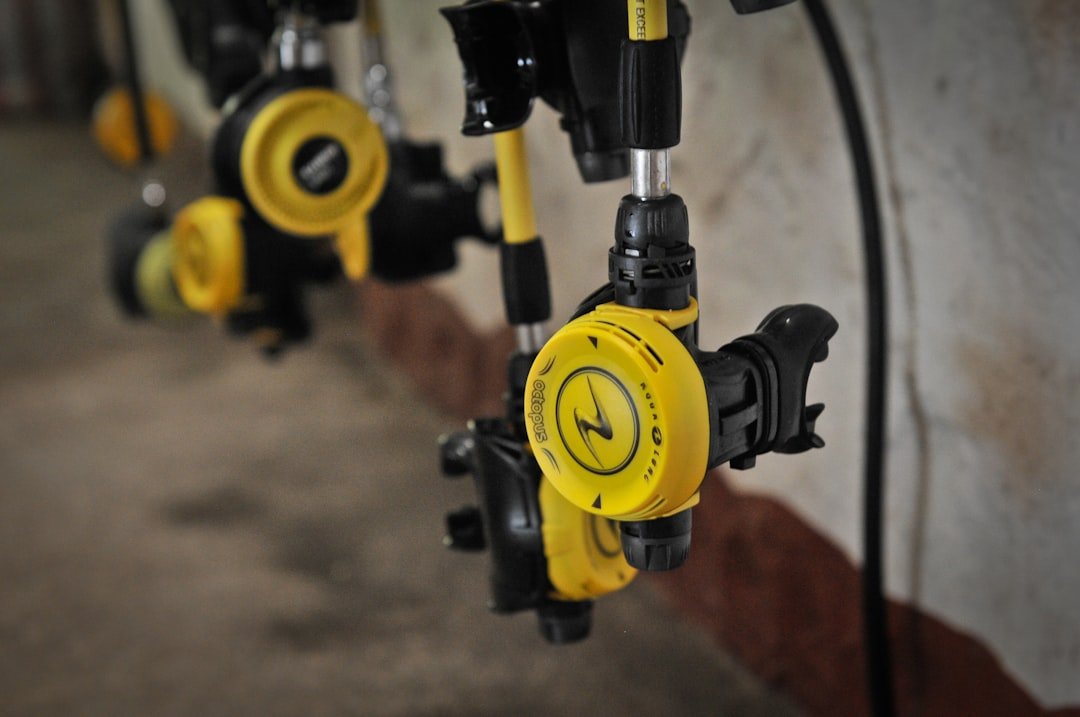
A common misconception is that a long hose automatically makes any diver safer. It does not. In the long hose vs standard hose regulator choice, most recreational divers should buy and use a standard hose unless they are taking technical or cave training that teaches a long-hose donation procedure. Keep it simple. The long hose is a purpose-built tool for specific gas-sharing protocols, overhead environments, and team configurations, not a universal upgrade for a typical reef, quarry, or holiday boat dive.
Long hose vs standard hose regulator for everyday diving
My clear recommendation for the common case is a standard second-stage hose, usually around 28 to 32 inches (roughly 70 to 80 cm), routed in the normal recreational style. It is easy to manage. This setup works well when two divers can swim beside each other during an out-of-gas ascent, when the dive has a direct route to the surface, and when your buddy may not know a technical donation drill. Most recreational courses teach a variation of this arrangement, so it reduces the chance that equipment placement and emergency practice are working against each other.
A standard hose has less loose material around your chest and neck, and that matters when you are climbing ladders, dealing with a camera, or making a simple giant stride from a crowded boat. It stays tidy. It also costs less to replace if it gets damaged, although prices vary by region and by hose material. A conventional hose is not inferior equipment. It is the appropriate answer when your diving plan and training are conventional.
The long-hose setup is different because it is built around primary donation. In that method, the regulator in your mouth is the one you give to an out-of-gas diver, while you switch to a backup second stage worn on a short necklace under your chin. That is deliberate. A panicked diver is likely to reach for the regulator they see you breathing, and a technical team practices the handoff until it is immediate and controlled under task load.
For cave and many technical configurations, the primary hose is commonly about 7 feet or 2.1 m long. Some divers use a shorter long hose, often around 5 feet or 1.5 m, for selected open-water technical applications. Protocols differ. The added length lets two divers move in single file while sharing gas, which is a major advantage where a restriction, silted passage, wreck penetration, or decompression stop does not allow comfortable side-by-side swimming. That extra space is the whole point.
Why technical and cave divers use a long hose
In an overhead environment, an out-of-gas event is not solved by a direct vertical ascent. The team may need to travel back through the passage they entered, manage buoyancy in limited space, avoid contact with a fragile ceiling or silty bottom, and maintain clear communication while breathing from one cylinder supply. Space gets tight. A long hose can place the donor ahead of the receiver, allowing both divers to face the exit and keep moving through a passage where shoulder-to-shoulder gas sharing would be impractical.
Technical divers also value equipment consistency. When every member of a team routes the primary hose similarly, uses a necklace-mounted backup, and follows the same donation sequence, the gear supports a shared response rather than forcing each diver to interpret an unfamiliar setup in an emergency. Consistency matters. This is why a long hose is normally taught as part of a complete system that includes cylinder configuration, buoyancy equipment, gas planning, communication, and team procedures.
The routing is not casual. A 7-foot hose generally comes from the right post, routes down and around the diver’s torso, then up to the primary second stage, with the excess retained under a waist belt or light canister depending on the configuration and training standard. A shorter long hose may route differently. Do not copy a photo. Incorrect routing can leave a loop that catches on a valve, reel, wreck edge, or your own equipment, and it can make a donation slower rather than faster.
A long hose also creates a cleaner gas-sharing position during decompression stops or when carrying stage cylinders, provided both divers have trained the same method. The donor has room to hold position without being pulled face-to-face with the receiver. That is useful. But it only works reliably when the hose is deployed, donated, recovered, and stowed through repeated supervised practice, not when it is fitted the night before a trip.
Where a standard hose wins
Standard hoses win for the vast majority of no-decompression recreational dives because they are low-fuss and familiar. That is enough. On a shallow guided reef dive, for example, your main priorities are usually buoyancy, navigation, staying with the group, checking gas, and avoiding contact with coral. A long hose adds management work without solving a problem that the dive plan is likely to create.
They also make sense if you frequently rent equipment, dive with newly certified buddies, or use a jacket-style BCD with no secure way to retain a long hose. The cleanest configuration is often the safest one for that diver. If a buddy sees a long hose but has never practiced primary donation, they may hesitate or grab whichever second stage is closest during an actual emergency. Familiarity counts more than looking technical.
Cold-water recreational divers may sometimes prefer a standard hose as well, especially if thick exposure protection, a hood, a camera tray, and a bulky BCD already make the front of the body busy. Loose gear is annoying. A well-routed long hose can be very tidy, but a poorly matched setup can interfere with an inflator, drysuit hose, pocket access, or clipping off a stage bottle. Fit your actual kit, not an internet ideal.
There is another practical point. Most standard recreational regulator sets come ready to use, while a proper long-hose arrangement may require a specific hose length, a backup necklace, a bolt snap on the primary second stage, and sometimes changes to hose routing or first-stage orientation. Small parts add up. Buying those parts before you have a course plan is usually backwards, because instructors and agencies may teach a configuration with details that differ from what you bought.
What changes when you donate gas
With a conventional recreational setup, the exact out-of-gas response depends on the training agency, instructor, and equipment layout. Some systems teach donating the alternate air source, while others teach donating the primary and switching to an alternate. Practice matters. The relevant point is that your hose choice must match the emergency skill you and your regular buddy have actually rehearsed, including how you establish contact, control buoyancy, share gas, and end the dive.
A primary-donation long-hose setup has a logical sequence: give the regulator already known to be working, move to the backup under your chin, establish the planned gas-sharing position, then begin the exit or ascent appropriate to the dive plan. It sounds straightforward. Under stress, however, even a simple sequence becomes harder when visibility is poor, a mask is displaced, or a diver is task-loaded. Certified training is where that sequence belongs.
Do not assume a longer hose gives you permission to separate farther from your buddy. It does not. The hose gives physical room for a particular swimming position during a gas-sharing exit. It is not a tow line, a substitute for close buddy contact, or an excuse to stretch out around a wreck corner. A hose can snag. Your gas plan, team position, and turnaround pressure remain the real controls.
A practical way to choose your setup
- Start with your next 20 dives. Be honest. If they are normal open-water recreational dives with direct access to the surface, choose a standard hose and spend the saved money on service, exposure protection, or more supervised practice.
- Check your training plan. If you are enrolled in technical or cave training with a certified instructor, wait for that program’s equipment requirements before buying hose lengths, necklaces, or hardware. Course standards matter.
- Assess the complete configuration. Put on your BCD, exposure suit, weights, computer, inflator hose, and any camera or torch you actually use. Nothing should obstruct access to releases, valves, or the regulator you need to donate.
- Practice only within training. An instructor can evaluate whether your hose deploys cleanly, whether the backup stays where you can find it, and whether you can manage a donation without losing buoyancy control. Dry practice alone is not enough.
Here is a simple worked example. A diver doing 12 boat dives on holiday, all shallower recreational profiles with guides and no planned penetration, gets very little practical benefit from changing a 30-inch hose to a 7-foot hose. Save the complication. A diver beginning an approved cave curriculum, using matched team equipment and planning single-file exit drills under direct supervision, has a clear reason to use the long hose specified by that curriculum.
Fit, comfort, and regulator performance
Hose length does not determine how well a regulator breathes. That comes down to the regulator design, its condition, correct setup, cylinder pressure, depth, breathing demand, and environmental factors. Service comes first. A high-quality regulator on a standard hose can be an excellent recreational setup, while a neglected regulator on a long hose is still a poor choice.
Comfort does matter, but check it in the water rather than judging it in a shop mirror. Turn your head both ways. Look over each shoulder, inflate and deflate your BCD, reach your releases, and simulate the movements your dive requires. If the second stage pulls at your mouth or the hose rises into your mask strap, the routing needs attention. Do this in calm water with a qualified instructor if you are changing configurations.
Hose material is a separate decision. Rubber hoses are usually durable and have a familiar weight, while braided hoses can feel lighter and more flexible but should still be inspected for abrasion, damaged fittings, or fraying. Inspect before diving. Whatever material you choose, replace a hose that shows cracking, bulging, corrosion at the fitting, or any sign of leakage, and have a qualified technician assess regulator problems.
Buying advice without overbuilding your kit
If you are a recreational diver shopping today, buy the regulator that fits your local service options, breathing needs, water temperature, and budget, then keep the supplied standard primary hose unless you have a trained reason to alter it. This is the sensible path. Ask the retailer or service technician about compatible hose threads and torque requirements rather than forcing fittings yourself, because a regulator connection must seal correctly under pressure.
If you are moving toward technical or cave diving, avoid piecing together a configuration from social-media photos. Take the prerequisite training first, or at least confirm the required setup with the instructor running your booked course before ordering equipment. Details such as hose length, cylinder placement, wing style, light-canister position, and backup retention are linked. One wrong choice can make the rest awkward.
I have found that simple gear is easier to audit before a dive. One glance should tell you where the primary, backup, pressure gauge, inflator, and any clips are located. If you cannot explain why each item is routed as it is, pause there. A qualified instructor can help you build a configuration that matches the dives you are trained to make.
FAQ
Is a long hose safer for recreational diving?
No, not by default. A standard hose is usually safer for a recreational diver when it matches their training and stays neat around their existing equipment. The long hose can improve options during specific gas-sharing exits, but it also creates extra routing and deployment tasks. Use it after appropriate technical or cave instruction.
Can I put a long hose on any regulator?
Many regulators can accept compatible low-pressure hoses, but compatibility is not enough. Check the manufacturer guidance and have a qualified technician confirm the correct fitting, routing, and installation. Pressure equipment deserves care. A hose that physically screws in may still be the wrong length or layout for your first stage and BCD.
Why do cave divers donate the primary regulator?
The primary regulator is known to be delivering gas because the donor is breathing from it at that moment. That is useful. The donor then switches to a secured backup regulator, while the long hose permits a single-file position for an exit through confined space. This is a trained team procedure, not an improvised response.
Should I use a 5-foot or 7-foot long hose?
Use the length required by your instructor, course, and planned configuration. A 7-foot hose is common in cave-style configurations because it gives room for single-file gas sharing, while 5-foot options appear in some open-water technical setups. Do not choose by height alone. Routing, cylinder configuration, and team protocol determine whether either length works properly.
Can I practice long-hose donation with my usual buddy?
You can review equipment placement on land, but in-water emergency-skill practice should be part of training with a certified instructor who can assess buoyancy, contact, ascent control, and the specific configuration. Keep conditions easy. If either diver is new to the system, do not test it during a deeper dive, current dive, or overhead dive.
Related posts
This article is for general informational purposes only and is not dive training or medical advice. Always train with a certified instructor and consult a doctor before diving if you have any health concerns. Gear specs, pricing, site conditions, and operator schedules change, so verify current details directly with the manufacturer or dive operator.
Disclosure: This post may contain affiliate links. If you click through and make a purchase, we may earn a commission at no extra cost to you. We only recommend gear we’ve researched or genuinely believe in.