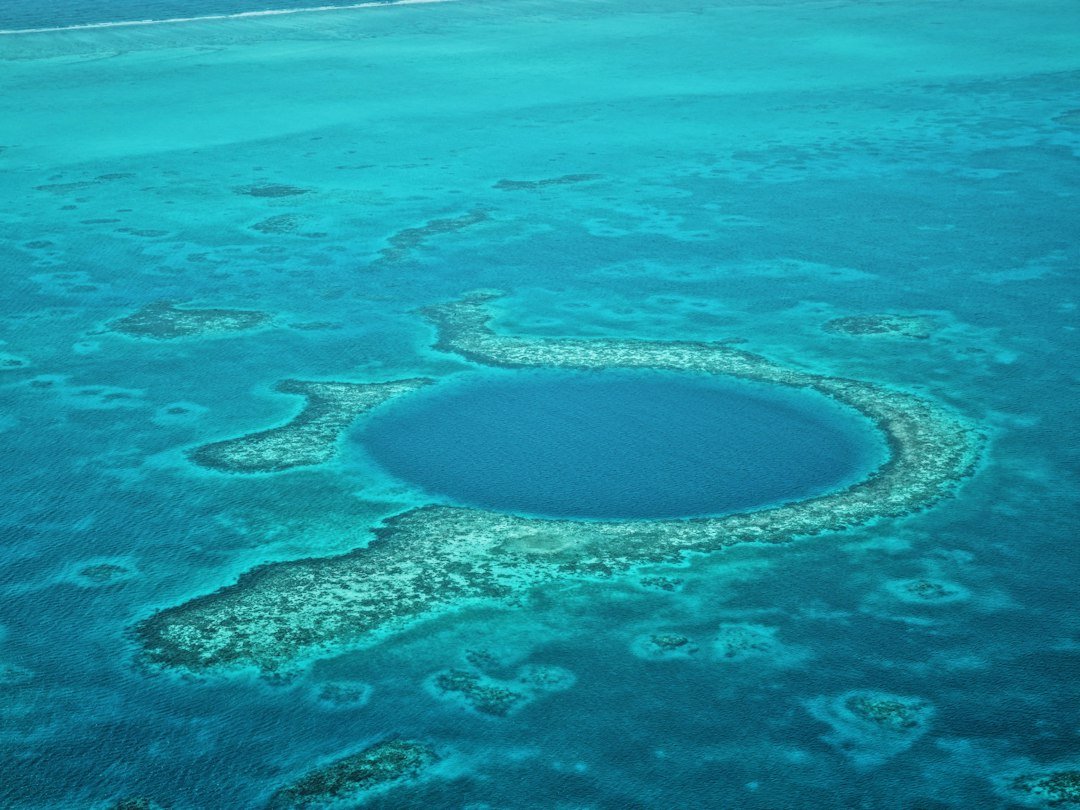
As you zip your wetsuit on a rolling boat before sunrise, the best diving in Belize Blue Hole is usually a deep descent to ancient limestone formations, followed by a short bottom time and a careful ascent. It is not a casual reef dive. The best diving in Belize Blue Hole rewards divers who want the site’s scale and geology more than nonstop marine life, and who are comfortable meeting the experience, certification, and recent-diving requirements set by their operator.
What makes the Blue Hole different
The Great Blue Hole is a circular marine sinkhole within Lighthouse Reef, far offshore from mainland Belize and the popular islands. It looks unreal from above. Underwater, the main attraction is its enormous blue interior, steep walls, and submerged stalactites that formed when the cave system was above sea level during a much lower sea level period.
This is a depth-oriented dive. Most dive plans descend along the inside wall, pass a ledge or overhang, and reach the better-known stalactite zone at a depth often around 24 to 30 metres, though the exact profile depends on the operator, tide, current, and diver qualification. The formations are memorable, but they are not brightly lit coral gardens. Light fades quickly.
The deepest parts of the sinkhole are far beyond recreational limits. Leave them alone. A responsible recreational profile stays within the depth limit of your certification, training, computer settings, gas supply, and the guide’s plan, with enough reserve for a controlled ascent and safety stop. A deep dive is not the place to chase a photo or extend a descent because another group went lower.
Best diving in Belize Blue Hole for different divers
The Blue Hole makes the most sense for experienced recreational divers who are calm at depth, can hold position without grabbing coral or a line, and have recent practice with buoyancy, equalisation, and computer monitoring. It can feel intimidating. Even with a guide nearby, you may be looking into a dark open space with fewer visual references than on a shallow reef.
Many operators ask for an Advanced Open Water certification or equivalent experience, plus a minimum number of logged dives. Requirements differ. Some also want proof of recent diving, a dive computer, or nitrox certification for certain profiles, although the appropriate gas choice depends on the planned maximum depth and the operator’s procedures. Check the exact prerequisites before you book, not when you are on the dock.
If you are newly certified, there are better Belize dives to build confidence first. Hol Chan Marine Reserve, nearby barrier reef sites, and shallow patch reefs can offer easier buoyancy practice, warmer-feeling shallows, more colour, and longer no-decompression time. Get comfortable first. A certified instructor can help you choose an appropriate progression and refresh key skills.
What the dive day usually looks like
Day boats commonly leave from Ambergris Caye or Caye Caulker early in the morning, while liveaboards may visit as part of an outer-atoll itinerary. It is a long day. The outward ride can take several hours depending on the departure point, boat, weather, and sea state, so bring reef-safe sun protection, water, a light layer, and any motion-sickness medication your doctor says is suitable for you.
The Blue Hole is often the first dive because it is the deepest. After a briefing, divers usually enter in small groups, descend promptly, visit the planned formation depth, then ascend slowly with the guide while watching depth, time, no-decompression limits, and gas. The working part can feel brief. That is normal on a deep recreational dive.
Most full-day trips add two dives at Lighthouse Reef sites such as Half Moon Caye Wall or another shallow reef area. These later dives are often the marine-life payoff, with clearer colours, coral structure, reef fish, and sometimes larger animals depending on conditions. Do not burn through your air early. The Blue Hole may be the headline, but the reef dives can be the dives you remember most.
Conditions you should realistically expect
Water conditions change by season and weather. Visibility can be very good, yet surface chop may make entries and exits tiring, especially after a long ride. Expect movement. Current inside the hole is often manageable on a well-run dive plan, but it can vary, and a current-free forecast is never a promise.
Temperature also changes with depth. A surface that feels pleasant can become noticeably cooler near the stalactites, especially during the cooler months or after rain and wind. Bring exposure protection you have already used successfully at similar temperatures. New gear can distract you.
Marine life is possible, but it should not be your sole reason for going. You may see reef sharks, turtles, fish along the rim, or schools in the blue, yet the interior can look sparse compared with a healthy shallow reef. The stalactites are the point. Treat wildlife as a bonus rather than a guaranteed sighting.
How to prepare before booking
Start with your recent dive history. If your last dive was many months ago, schedule a local refresher or an easy Belize checkout dive before committing to the Blue Hole, especially if you have not practised controlled descents, mid-water stops, or close monitoring of air consumption recently. Skills fade quietly. A short refresher can make the day far more comfortable.
- Read the operator’s requirements. Confirm certification level, minimum logged dives, recent-dive rules, maximum planned depth, equipment inclusions, and any medical form.
- Check your computer. Make sure its battery is good, you understand its alerts, and its conservative settings match your own plan and training.
- Pack familiar exposure gear. Test mask, fins, regulator, BCD, and computer before travel whenever possible.
- Ask about the full schedule. Confirm departure time, estimated return, meals, drinking water, marine park fees, and cancellation policy.
- Leave a margin. Plan no flying after diving according to your training agency guidance, dive-computer instructions, and a conservative itinerary.
Do not treat the boat briefing as a formality. Listen for entry order, descent method, maximum depth, turn pressure, lost-buddy procedure, surface-marker requirements, and what happens if someone cannot equalise. Ask before splash time. A good question on deck is easier than a problem at 28 metres.
Gear that makes the day easier
A reliable dive computer is essential for this type of trip, and carrying a delayed surface marker buoy is sensible when your training and operator procedures call for one. Keep your kit simple. The Blue Hole is not a place to test an unfamiliar camera rig, new mask, or complicated hose configuration for the first time.
For photography, a compact setup can be more practical than a large rig because the deeper section is dark, time is limited, and good buoyancy matters more than getting one wide-angle shot. Use a lanyard if appropriate. Never hand equipment to a boat crew member in the water unless that is part of the operator’s stated procedure.
Consider your own air consumption honestly. Larger divers, anxious divers, and people who work hard against poor trim may use gas faster at depth, where each breath consumes more cylinder gas than it does near the surface. This is basic pressure physics. Tell the guide if you tend to be an early-air diver so the group plan can account for it.
Costs, timing, and choosing an operator
Blue Hole day-trip prices are generally higher than local two-tank reef trips because of fuel, travel distance, park access, food, and the long crew day. Prices vary by region and operator. Compare what is actually included, particularly rental gear, tanks, meals, transfers, fees, gratuities, and whether an equipment issue means you miss the dive.
Ask an operator how they group divers, whether they use a descent line, how many divers are with each guide, and whether they cancel or reroute when sea conditions are poor. Those answers matter. A lower headline price is less useful if the group is too large for the planned profile or the schedule feels rushed.
Belize diving can be good at different times of year, but weather, wind, rain, and visibility are variable. Build flexibility into your trip. If the Blue Hole is your main goal, avoid scheduling it on your final possible dive day so a weather cancellation does not end the plan.
FAQ
Is the Blue Hole dive suitable for beginners?
Usually, no. The dive is deep, the bottom time is limited, and offshore conditions can add workload before you even descend. A newer diver may enjoy Belize far more on shallow reefs first. Follow the operator’s requirements and get advice from a certified instructor if you are unsure whether your experience is current enough.
How deep do recreational divers go in the Blue Hole?
Many recreational dive plans visit formations roughly in the 24 to 30 metre range, while some qualified divers may follow plans closer to 40 metres if their certification, gas, equipment, and operator procedures allow it. Depth is not a target. Stay within your personal training and the guide’s stated maximum.
Will I see sharks inside the Blue Hole?
You might, but there is no guarantee. Reef sharks and other pelagic sightings can happen around the rim or in open water, while the interior itself may have limited visible life. Go for the geological setting. Reef dives later in the day often offer more consistent fish activity.
Can I fly after a Blue Hole day trip?
Do not plan a flight immediately after diving. Follow the no-fly guidance from your training agency, dive-computer manufacturer, and dive operator, and allow extra conservatism after multiple dives or a deep profile. If you have a medical condition or questions about diving and flying, speak with a doctor familiar with dive medicine.
Related posts
This article is for general informational purposes only and is not dive training or medical advice. Always train with a certified instructor and consult a doctor before diving if you have any health concerns. Gear specs, pricing, site conditions, and operator schedules change, so verify current details directly with the manufacturer or dive operator.
Disclosure: This post may contain affiliate links. If you click through and make a purchase, we may earn a commission at no extra cost to you. We only recommend gear we’ve researched or genuinely believe in.