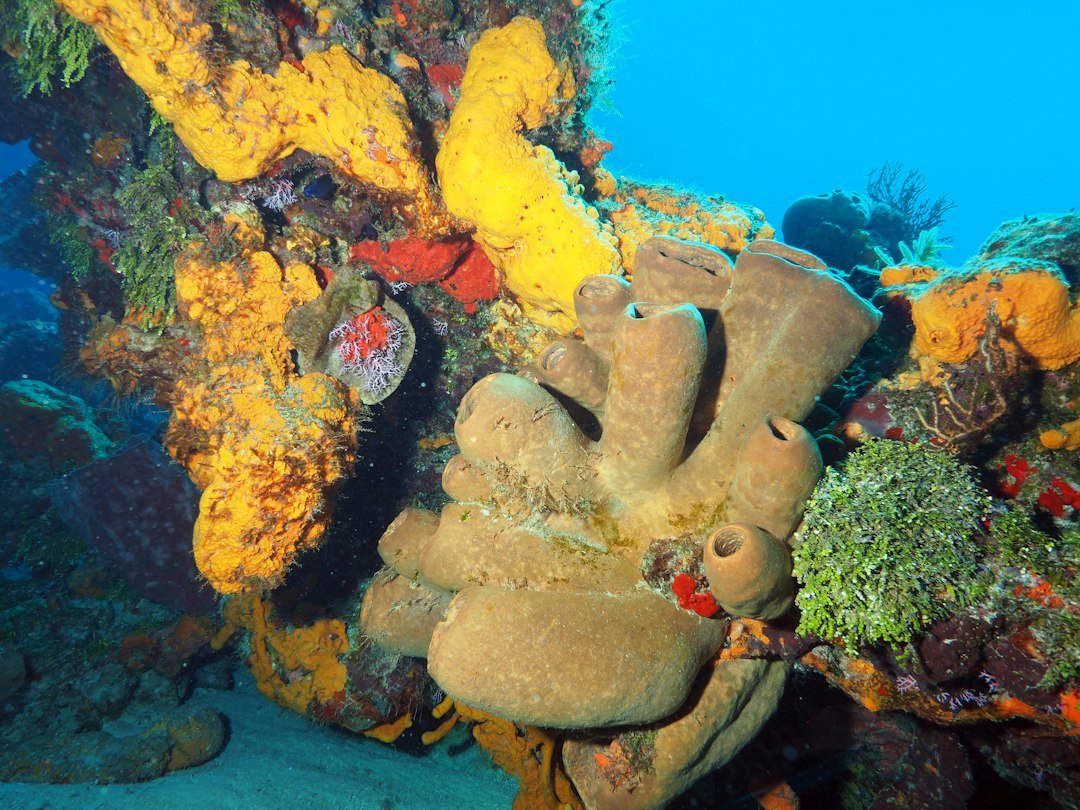
A common misconception is that the best diving in Cozumel Mexico is reserved for advanced divers who want fast current and deep walls. That is not true. The best diving in Cozumel Mexico includes relaxed, shallow drift dives as well as more demanding wall dives, and a good operator can match the route to your experience, air use, and comfort in moving water. Conditions decide a lot.
Cozumel sits beside the Mesoamerican Reef, with the island’s western coast facing clearer Caribbean water and regular current that carries groups along the reef. Most boat dives are planned as drifts. You descend together, stay close to the guide, follow the reef’s contour, and the boat tracks the group’s surface position before collecting divers at the end. It feels easy when conditions are mild. It still requires attention.
The current is not the attraction by itself. What makes Cozumel work so well is the combination of current, healthy-looking hard coral structure, swim-throughs, sandy channels, and enough reef variation that two dives in the same area can feel quite different. A gentle drift lets you cover ground without finning hard, which many recreational divers find more relaxing than a stationary reef dive. You must maintain buoyancy.
Best diving in Cozumel Mexico for drift diving
For a first Cozumel trip, I would prioritize a schedule that includes Paso del Cedral or a similar shallower central reef, then a Palancar-area dive, before committing to Santa Rosa Wall or Punta Sur. This progression gives you time to adjust to the current, boat routine, and your weighting in salt water. Start simple. A dive operator cannot control the sea.
Site names are useful, but they do not guarantee one exact dive. Entry point, current direction, weather, other boats, and marine-park instructions can change the plan on the day. Ask the operator what conditions they expect that morning, what maximum depth they intend, and whether the group will stay together or split by experience. Clear answers matter.
| Area | Typical dive character | Best fit | What to ask about |
|---|---|---|---|
| Paso del Cedral | Shallower reef, sand channels, moderate drift potential | Newer drift divers and mixed-experience groups | Current strength and planned depth |
| Palancar area | Coral formations, tunnels, broad reef sections | Divers wanting scenic reef structure with manageable profiles | Which Palancar section the boat will visit |
| Colombia area | Open reef, larger coral heads, occasional stronger flow | Comfortable recreational divers with good buoyancy | Visibility, current, and group size |
| Santa Rosa Wall | Wall-like drop-offs, ledges, deeper potential profiles | Experienced divers within their training and gas limits | Depth plan, current, and turnaround procedure |
| Punta Sur | Southern sites with stronger current potential and more exposure | Confident, appropriately trained divers on a suitable day | Certification requirements and surface conditions |
Choose your Cozumel drift dive zone
Start with Paso del Cedral
Paso del Cedral is often a sensible choice when you are new to Cozumel-style drifts or have not dived in current recently. Its reef and sandy areas can make depth control easier to visualize, and the profile may suit a conservative first dive better than a wall site. It is a practical warm-up. Conditions still vary.
Use this dive to check basic details: whether your fins feel efficient, whether you are carrying too much weight, how quickly your breathing settles after descent, and how well you can hold position near the guide without touching coral. If any of those feel off, tell the guide before the second dive. Small adjustments help.
Pick Palancar for reef structure
Palancar is often the name divers expect to hear because its reef formations, overhangs, and coral channels give a classic Cozumel experience. Different sections are commonly described under the Palancar name, so ask for the planned section rather than assuming every Palancar dive has the same depth or current. The name covers a lot.
This is a good place to slow down mentally. Current can encourage divers to rush past every feature, but the best observations often happen when the group settles at a safe distance above the reef and watches one area as it passes below. Look for movement. Do not chase animals.
Consider Colombia after a comfortable first dive
Colombia can provide a more open reef feel, with large coral formations and long views when visibility cooperates. It may be an excellent second dive for someone who handled a gentler morning drift well, but it is not automatically harder or easier than Palancar because the day’s water movement changes the experience. The briefing tells you more.
If you have a preference for photography, mention it before boarding. A small, steady group and a site with moderate current often matter more than selecting the most famous name on a dive map. Good trim helps too. Avoid carrying a bulky setup you have not practiced with.
Save Santa Rosa Wall for the right profile
Santa Rosa Wall appeals to divers who like pronounced reef edges, ledges, and the sense of deeper water beside them. That scenery can tempt people to descend beyond the agreed plan or spend too long at depth. Stay disciplined. Your computer and gas plan decide the dive.
You do not need to be an extreme diver to enjoy a wall, but you should be comfortable maintaining depth, monitoring your instruments, and staying with the group when the current changes direction around structure. If deep water makes you anxious, say so before entering. A certified instructor can help build these skills through proper training.
Treat Punta Sur as a conditions-based choice
Punta Sur is often discussed as a more advanced southern option because currents and surface conditions can be more demanding there. On an appropriate day, it can be a rewarding drift for divers who have the needed experience and meet the operator’s requirements. It is not a box to tick.
Take the operator’s assessment seriously, even if a dive buddy wants to go. A responsible operator may change the site, cancel the outing, or limit a dive based on current and weather. That is good judgment. No destination dive is worth forcing.
How to get more out of a drift dive
Drift diving works best when every diver follows the same simple plan. Listen closely to the boat briefing, because pickup procedures, entry order, surface marker rules, and separation procedures vary between operators. Ask questions on the boat. Do not wait until descent.
- Confirm the planned maximum depth and the minimum gas reserve before gearing up.
- Check your computer, pressure gauge, inflator, releases, and buddy’s basic setup.
- Enter only when the crew gives the signal, then descend with your assigned buddy or group.
- Stay within easy visual distance of the guide and avoid fighting the current.
- Make a calm, controlled ascent when directed and follow the operator’s surface procedure.
The most common mistake is over-finishing. Divers sometimes kick hard against the current to inspect one turtle, recover a dropped position, or reach a distant buddy, then arrive at the next section tired and breathing faster. Let the current move you. Use short fin strokes for control.
Buoyancy matters more than speed. Keep fins away from coral, hold a stable horizontal position, and make small adjustments rather than large inflator changes. If you cannot hover without sculling your hands or touching the reef, choose an easier profile and practice with a certified instructor before taking on stronger current. The reef deserves space.
Carry the safety equipment your operator requires and know how to use it before the dive. Many operators expect each buddy team or diver to have a delayed surface marker buoy and audible signaling device, but requirements differ. Ask before travel. Practice belongs in supervised training conditions.
Plan your Cozumel diving days well
Most visitors find that a few days of diving gives them a better experience than trying to pack every famous site into two rushed boat trips. Use the first day to settle in, check weighting, and learn the operator’s system. Then build up. Your final dive day should also leave appropriate time before flying, based on established dive-safety guidance and your actual dive profile.
Water exposure can make a normally comfortable wetsuit feel different over repeated dives. Bring the exposure protection that matches your own cold tolerance, even if the air feels warm at the dock. A thin wetsuit may work for one person and leave another chilled by the second dive. Being cold increases fatigue.
For cameras, keep the system simple on your first current dive. A compact camera on a secure lanyard is easier to manage than an unfamiliar tray, lights, and multiple arms that change your trim. Take a few reef shots first. Learn the current before chasing wide-angle scenes.
Boat practices vary, so confirm what is included when comparing operators: tanks, weights, lunch, park fees, rental equipment, nitrox availability, and hotel transport may be priced separately or bundled. Prices vary by region and season. Verify current policies directly with the operator before paying a deposit.
FAQ
Is Cozumel suitable for a newly certified diver?
It can be, provided the operator can offer conditions and sites that match your experience. Tell them honestly how many dives you have done, when you last dived, and whether you have used a surface marker buoy or dived in current before. Honest details help. Do not overstate your comfort level.
When is the current strongest in Cozumel?
There is no single daily answer because current can change with weather, tides, site location, and local water movement. The crew’s assessment on the morning of the dive is more useful than a generic calendar prediction. Check the briefing. Be ready for a site change.
Do I need a special drift diving certification?
Operators set their own participation requirements, and some dives may require evidence of experience or additional training. A drift specialty course can be useful if you want structured practice with current procedures, but it does not replace sound judgment or site-specific briefings. Training builds skills. Conditions still matter.
What marine life might I see?
Reef fish, turtles, rays, eels, lobster, and nurse sharks are among the animals divers may encounter around Cozumel, though wildlife sightings are never guaranteed. The best approach is to stay calm, keep your distance, and let an animal choose whether it remains nearby. Do not touch anything.
Which Cozumel dive site is best for photographers?
Palancar and Colombia are often appealing because reef structure gives photographers useful foregrounds, while a gentler current can make framing easier. The best choice depends on your experience with the camera, group pace, visibility, and the day’s current. Start with control. Photos come second.
Related posts
This article is for general informational purposes only and is not dive training or medical advice. Always train with a certified instructor and consult a doctor before diving if you have any health concerns. Gear specs, pricing, site conditions, and operator schedules change, so verify current details directly with the manufacturer or dive operator.
Disclosure: This post may contain affiliate links. If you click through and make a purchase, we may earn a commission at no extra cost to you. We only recommend gear we’ve researched or genuinely believe in.