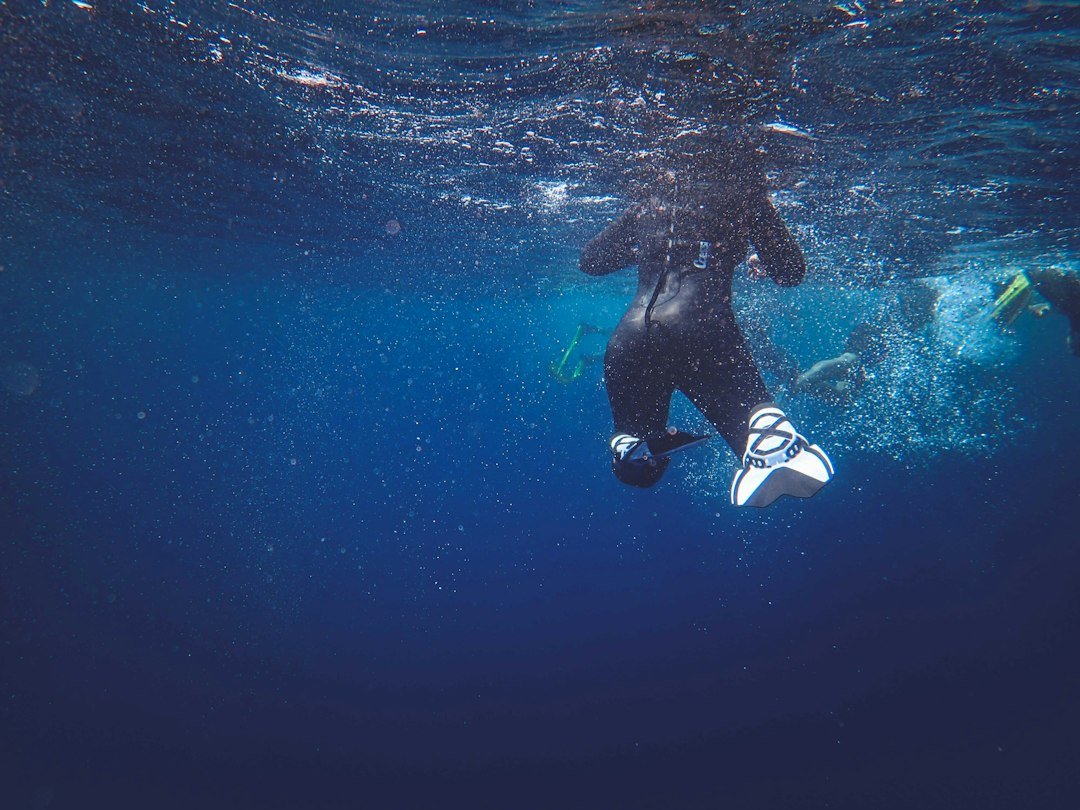
You are standing on a hot dock in a swimsuit, carrying mask, fins, and a camera, and wondering whether to pull on socks or proper booties before the boat leaves. For fin socks vs neoprene boots in warm water diving, thin neoprene fin socks are the clear default for most divers who use full-foot fins and enter from a boat. They pack small. In the common warm-water setup, fin socks vs neoprene boots is less about warmth than fin type, fit, and how far you must walk before getting wet. Choose 2 mm to 3 mm socks for full-foot fins, then move to boots if your fins have an open heel or the entry involves rocks, coral rubble, hot pavement, or a long beach walk.
Fin socks vs neoprene boots for warm water diving
Fin socks are thin neoprene or lycra-neoprene foot coverings with little or no structured sole. They are made to reduce rubbing inside a full-foot fin pocket while adding a modest layer of warmth. They dry quickly. Neoprene boots, often called booties, have a shaped sole and a heel designed to sit under the strap of an open-heel fin. They protect your feet on land much better, but they take more room in a fin pocket and in a carry-on.
The important distinction is mechanical, not cosmetic. A full-foot fin holds your whole foot inside a closed pocket, so a bulky boot can make the pocket painfully tight or leave your toes jammed against the end. An open-heel fin leaves room around the back of your foot and uses an adjustable strap, so a boot gives the strap a stable surface to grip. Start there. Buying footwear before checking your fin style is how divers end up with gear that technically fits in the bag but does not work in the water.
The clear choice for most boat divers
If you dive tropical or subtropical water from a boat, wear full-foot fins, and walk only a few steps between the deck and entry point, buy thin fin socks. A 2 mm sock is usually the practical sweet spot for warm water diving because it limits heel rub without changing the fit of a properly selected full-foot fin too dramatically. Keep them thin. A low-cut or ankle-height model is easier to put on, dries faster, and is less likely to bunch at the top of the fin pocket.
This recommendation assumes your full-foot fins already fit with the socks you plan to use. That detail matters. A fin that feels perfect barefoot may become too tight with even a 2 mm neoprene sock, particularly if its toe box is shallow or you have a high-volume foot. Conversely, a slightly loose fin can become secure with socks, although adding thickness to fix a badly oversized fin is rarely comfortable over a full dive day.
Boots win immediately if you own open-heel fins. They also win if a normal day includes carrying a cylinder across gravel, walking a slippery boat ramp, crossing sharp shell fragments, or standing on rough shoreline rocks while timing an entry. Protection matters. In those conditions, the extra bulk is an acceptable trade for safer footing and less chance of cutting or bruising a foot before the dive even starts.
How the options compare
| Factor | Thin fin socks | Neoprene boots |
|---|---|---|
| Best fin type | Full-foot fins | Open-heel fins |
| Typical warm-water thickness | 1 mm to 3 mm | 3 mm, sometimes 5 mm |
| Walking protection | Low, especially without a sole | Good on docks, sand, ramps, and rough paths |
| Bulk in luggage | Very low | Moderate, especially thick-soled models |
| Warmth | Light insulation | More insulation |
| Fin fit effect | Small but noticeable | Large, requires an open-heel fin sized for boots |
| Common problem | Heel blister or sock bunching | Too much boot inside the fin pocket or strap pressure |
The table gives the quick answer, but thickness alone does not tell the whole story. A soft 3 mm sock may fit inside one full-foot fin while a firmer 2 mm sock with taped seams feels restrictive in another. Soles also vary. A sock with tiny grip dots may be fine on a clean boat deck, while one with a thin rubber sole can still be uncomfortable on gravel after only a short walk.
Fit is where comfort is decided
A fin should hold your foot without squeezing your toes, crushing the top of your foot, or allowing your heel to lift each time you kick. Simple test. Put on the sock or boot you will actually dive in, wet it if possible, then wear the fin for several minutes while flexing your ankle and mimicking a kick. Your toes should not curl. The fin pocket should also not feel so loose that you can slide your heel sideways.
With full-foot fins, pay close attention to the heel opening. A stiff edge can rub the Achilles area, especially when you point your toes during a flutter kick or climb a ladder. Thin socks spread that pressure and reduce skin-on-rubber friction. They do not cure a wrong-sized fin. If the heel cup repeatedly bites, the fin shape may simply not suit your foot.
With open-heel fins, the boot must sit flat at the heel and fill the pocket without folding at the toes. Check the strap. A spring strap or adjustable rubber strap should lie centered over the boot’s heel ledge, not climb toward your ankle during kicks. If the strap slips, it may be too loose, the boot may lack a defined heel, or the fin may be designed around a thicker boot than yours.
Try your gear as a system. Put on your exposure suit, socks or boots, and fins together before a trip, then walk a little and make slow kick motions while seated. This takes ten minutes. It can prevent a frustrating first dive where a rental shop has no alternative fin size and your heel is already raw after the surface swim.
Warmth is useful, but it is not the main reason
Warm water does not always mean warm feet. Repetitive finning sends water through a full-foot pocket, and long dives can leave toes cold even when the surface is hot. A thin neoprene sock slows that heat loss without making your feet feel heavily insulated. For many divers, that is enough.
Water temperature is only one factor. A diver making a short, relaxed reef dive in calm 28 C water may be happy barefoot, while someone on a windy liveaboard with repeated dives, long surface intervals, and wet feet may prefer 2 mm or 3 mm coverage in the same water temperature. Personal tolerance varies. Your suit thickness, circulation, fatigue, and how long you stay wet affect comfort more than a single temperature number.
Boots are warmer because they have thicker neoprene and usually a more substantial sole. That can be welcome in water around the lower end of what a destination calls warm, or on early-morning dives after several wet days. But extra thickness changes fin fit fast. Do not assume a 5 mm boot will work with an open-heel fin that was adjusted around a thin tropical boot.
If your feet become unusually numb, painful, pale, or slow to regain normal sensation after diving, get out of the water and warm up gradually. Do not push through it. Persistent symptoms deserve medical advice, and a certified instructor can help you assess whether your exposure protection and dive planning suit the conditions.
Shore entries change the answer
Shore diving is the strongest argument for neoprene boots, even in very warm water. Sand is easy. Coral rubble, shell fragments, lava rock, uneven concrete ramps, and hot parking areas are not. A proper sole gives you traction and a barrier against cuts, but it does not make every surface safe or every entry sensible.
Do not walk on living coral. Apart from damaging the reef, it is unstable and can cause a fall or injury. Follow the local operator’s entry route, wear footwear that gives you secure footing, and use a buddy’s help if conditions call for it. Fins belong on your feet once you are deep enough to float or when the site procedure says so, not during a long awkward walk over hazards.
For easy sand entries, a thin-soled boot can be a useful middle ground with open-heel fins. It gives enough protection for hot sand and scattered shells without the weight of a heavy hard-soled boot. For rough entries, choose a boot with a firmer sole and confirm that your fin strap remains properly positioned. Thick hiking-style soles can make some open-heel fins feel unstable because the heel sits too high above the pocket.
Choose the right thickness
For a full-foot fin on ordinary warm-water boat dives, start at 2 mm. It is the least complicated option. A 1 mm sock works when you mainly want blister prevention and your fin is already snug, while a 3 mm sock makes sense for divers who run cold or have a pocket with enough room. Beyond that, full-foot compatibility gets less predictable.
For open-heel fins, 3 mm boots are the typical warm-water starting point. They give real sole protection and modest insulation without becoming excessively bulky. Choose 5 mm only when water, wind, or repeated diving leaves you cold and your particular fins have room. A thicker boot is not automatically better. It can increase foot fatigue if the pocket becomes tight or the strap presses into the Achilles area.
Look at seam placement, especially around the toes and heel. Flat seams are usually more comfortable for long finning sessions than a thick seam sitting directly under a pressure point. A zipper can make boots easier to pull on, but it adds another area that may chafe or leak and can fail over time. Pull-on boots are simpler. They often fit more smoothly inside an open-heel fin.
A practical buying sequence
- Identify your fin type. Closed full-foot pockets point to socks. Adjustable heel straps point to boots.
- Think about the entry. Choose boots if you expect rough ground, hot surfaces, or long walks carrying equipment.
- Pick the thinnest neoprene that solves your comfort problem. For most warm-water full-foot setups, that means 2 mm socks.
- Try the footwear with your own fins, not beside them. Check toe room, heel movement, and strap position.
- Do a short test swim before travel if possible. A pool session or calm shallow-water test can reveal rubbing quickly.
Here is a useful example. A diver with full-foot fins that fit barefoot with about 5 mm of empty space at the toe may find a 2 mm sock comfortable, but a thick 3 mm sock can remove that room and force the toes against the end during a kick. The exact dimensions differ by brand and foot shape. Fit by feel, not by a measurement rule alone.
Travel and drying considerations
Fin socks are easy travel gear. They weigh little, can tuck inside a mask pocket, and dry relatively fast when rinsed and hung inside out. That makes them especially convenient for resort boat diving where you may be moving gear between hotel, dock, and day boat. Small matters. A pair can also provide a backup barrier if rental fins rub your heels.
Boots take more space, particularly versions with thick molded soles. They also stay damp longer after repeated dives, so packing them for a flight requires thought. Rinse them in fresh water, drain them toe-down for a while, then let air circulate inside before packing. Avoid sealing wet boots in a plastic bag for days. The smell can become impressive.
For a liveaboard or a dive trip with limited drying space, write your name on a removable gear tag rather than directly on rental equipment or shared racks. Keep your socks and boots with your fins. Similar black neoprene items are easy to mix up after sunset, and trying on someone else’s damp boot before an early dive is nobody’s preferred start.
Common mistakes to avoid
The most common mistake is forcing a neoprene boot into a full-foot fin because the diver wants more walking protection. Do not do it. The pressure can cramp the foot, create blisters, and make it hard to remove the fin quickly at the exit. Use socks with full-foot fins, or switch to an open-heel fin setup if your dive style needs boots.
Another mistake is buying socks solely by shoe size. Neoprene stretches, size labels vary, and a loose sock can wrinkle under the heel. Wrinkles are trouble. Try them on, point and flex your feet, then confirm that the seam sits comfortably and the ankle opening does not dig in.
Also avoid treating footwear as a substitute for site judgment. Boots may protect against minor abrasions, but they do not make surge, slippery rocks, current, or an unfamiliar shore entry safe. Ask the dive operator about entry conditions, follow local procedures, and seek guidance from a certified instructor if you are new to shore diving or unsure about your equipment setup.
The warm-water verdict
For the most common warm-water diver, using full-foot fins on boat dives with short walks, choose thin 2 mm neoprene fin socks. They reduce friction, add a little warmth, travel easily, and preserve the light feel that makes full-foot fins appealing. That is the straightforward answer.
Choose neoprene boots when you use open-heel fins or your dives involve real walking hazards before entry. A 3 mm boot is usually the sensible warm-water choice, provided your fin pocket and heel strap fit it correctly. Test the complete combination before travel. Comfortable feet make every dive easier, while a poor fit can distract you through the entire descent and swim.
Related posts
This article is for general informational purposes only and is not dive training or medical advice. Always train with a certified instructor and consult a doctor before diving if you have any health concerns. Gear specs, pricing, site conditions, and operator schedules change, so verify current details directly with the manufacturer or dive operator.
Disclosure: This post may contain affiliate links. If you click through and make a purchase, we may earn a commission at no extra cost to you. We only recommend gear we’ve researched or genuinely believe in.