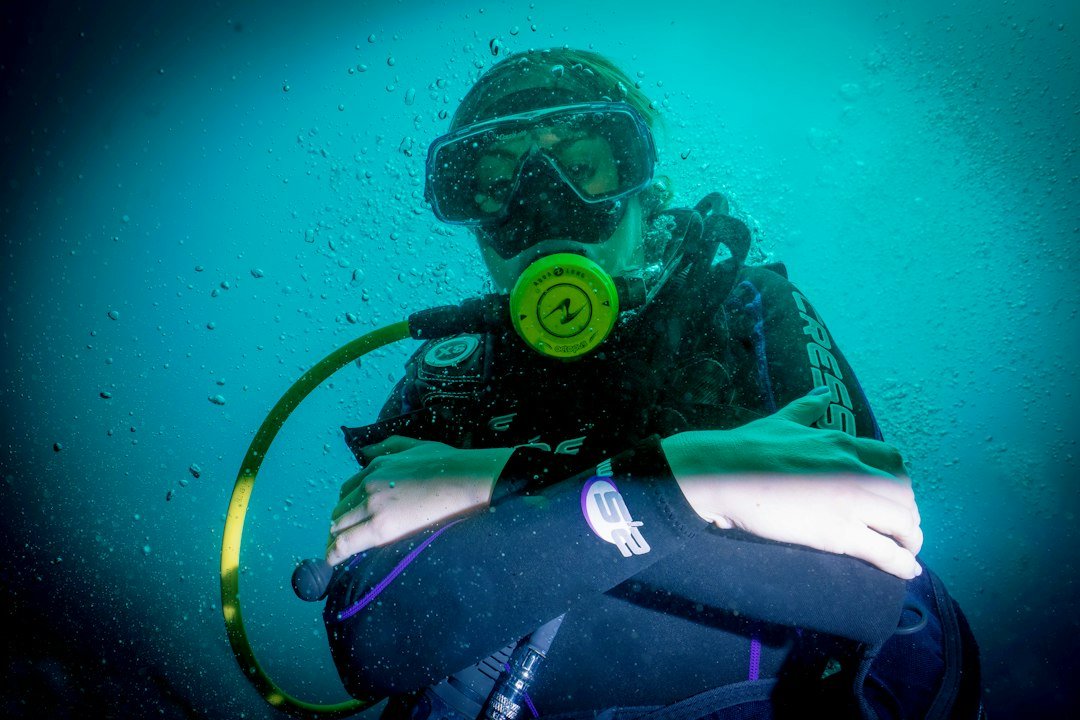
For most recreational buddy dives, octopus regulator vs pony bottle is an easy call: choose a properly configured octopus. It handles the most common backup-air problem, which is an out-of-air buddy who needs to share your main cylinder. That is the normal case. A pony bottle is the better choice when your dive plan requires an independent reserve that still works after a failure of your primary cylinder, valve, first stage, or hose.
The key difference is simple. An octopus is a second second-stage regulator connected to the same first stage and cylinder as your primary regulator, while a pony is a separate small cylinder with its own valve, regulator, and pressure gauge. One shares gas. The other carries separate gas. Neither item replaces sound gas planning, a functioning buddy system, or training with a certified instructor.
Octopus regulator vs pony bottle at a glance
| Factor | Octopus regulator | Pony bottle |
|---|---|---|
| Gas source | Your main cylinder | Independent small cylinder |
| Best common use | Giving a buddy emergency gas | Providing self-rescue gas after a primary-system failure |
| Bulk underwater | Low, with proper hose routing | Higher, plus trim changes |
| Cost and servicing | Lower, often serviced with primary regulator | Higher, because it is another cylinder and regulator system |
| Failure protection | Does not protect against loss of the main gas supply | Can protect against a main-cylinder or primary-regulator problem |
| Skill requirement | Standard recreational alternate-air-source practice | Requires specific planning, buoyancy practice, and gas management |
The table explains why an octopus is the default on ordinary guided reef dives, local club dives, and most recreational boat trips. It is lighter. It is also the configuration many buddy teams and operators expect to see. If a diver signals out of air, you can donate a working second stage and ascend together under the gas plan you learned in training.
Why an octopus is the best default
An octopus solves a frequent practical problem with minimal added complexity. Your buddy has a regulator issue, ran low because of an unexpected exertion spike, or has an out-of-air emergency. You donate gas. Both divers then leave the bottom promptly and make the ascent procedures appropriate to their training and conditions.
On a normal no-decompression recreational dive, the main cylinder already holds the gas you planned for two divers to make a controlled exit after an emergency donation. That planning matters. An octopus works best when both divers monitor pressure, agree on turn pressure, stay close enough to reach one another, and do not treat the alternate as permission to stretch the dive.
It is also easier to keep an octopus ready. A bright-colored second stage or hose makes it easier for a stressed buddy to locate, and a retainer or holder prevents the mouthpiece from dragging through sand or dangling where it can snag. Keep it visible. A regulator that is buried under hoses, clipped behind a hip, or packed with silt is a poor emergency tool.
Many recreational setups now use primary donation: the diver gives the regulator already in their mouth to the out-of-air diver, then switches to their octopus. That approach gives the buddy a second stage you know was breathing seconds ago. It has merit. It also needs repeated practice, clear configuration, and training, because hose length, necklace placement, and the location of the backup second stage must all make sense under stress.
A conventional yellow octopus can still work very well. The crucial point is that you and your regular buddy understand the donation method before entering the water. Agree on it topside. Do not invent a new procedure at depth because someone bought a different hose.
Where a pony bottle wins
A pony bottle wins when an independent gas supply is the actual problem you are trying to solve. It is separate. If your main cylinder valve has a serious issue, your primary first stage fails, a major hose rupture drains the main cylinder, or your main gas becomes inaccessible, an octopus connected to that system cannot create new gas.
This is why some experienced divers carry a pony on deeper shore dives, in cold water, on dives with a long swim to shore, or when a direct ascent is complicated by distance and conditions. The reason is not bravado. The diver wants a separate, immediately breathable reserve for themselves while they end the dive.
A pony can also make sense when you are diving with a buddy who is physically distant because of a task or site layout, although that should never become an excuse for poor buddy contact. Separation changes the risk picture. A pony gives you options during the time it takes to stabilize, signal, reunite, or exit.
It comes with real penalties. A small cylinder changes trim, adds drag, needs secure mounting, and has another valve and regulator that require inspection and servicing. It also needs enough gas for the scenario it is meant to cover. A tiny emergency cylinder can feel reassuring while providing far less usable time than the diver assumes.
Gas volume is the hard part. Consider an illustrative surface air consumption rate of 0.6 cubic feet per minute and a problem at 100 feet, where ambient pressure is roughly four times surface pressure. Breathing at the same rate would use about 2.4 cubic feet per minute before stress, cold, exertion, or a demanding exit raises consumption. Ten minutes at that depth alone would need roughly 24 cubic feet, before allowing for ascent gas and a safety margin.
That example is not a gas-planning prescription. It makes one point clear. A 19-cubic-foot pony is not automatically enough for every 100-foot emergency, while a larger cylinder may change the dive’s weight, balance, and mounting demands. Work out the required reserve with a certified instructor who understands your breathing rate, environment, equipment, and planned profile.
The weak points people miss
An octopus has a shared-point weakness. Both second stages depend on the main cylinder and first stage, so a failure that removes primary gas can disable both regulators. This is not a reason to dismiss octopuses. It is a reason to understand what they are designed to do.
A pony has its own weak points. A closed pony valve, an unpressurized regulator, an empty cylinder, a free-flowing second stage, or a gauge you never checked turns independent gas into dead weight. Check it. Then check it again during your pre-dive routine.
Mounting also matters more than many buyers expect. A pony slung at the side can be easy to see and manage, but it requires a tidy hose layout and stable attachment points. A back-mounted pony can be compact, though its valve may be harder for some divers to reach. Body shape, exposure suit thickness, BC design, and tank position all affect what feels balanced.
The same applies to octopus placement. The alternate should deploy without a hard pull, clear the other hoses, and remain protected from impact or contamination. Test this in shallow water. If you cannot locate and breathe it calmly with your eyes closed, the layout needs work.
Choose your backup air supply
Choose an octopus if you are a typical recreational diver making open-water buddy dives within normal no-decompression limits, with a reliable buddy nearby and a planned ascent available. That is my clear recommendation. Put the money into a dependable primary regulator, an alternate you can breathe comfortably, current servicing, and practice with your buddy.
Choose a pony bottle when you have a defined independent-gas need and the skills to manage it. This may include a cold-water shore dive with a long exit, a deeper profile where ascent gas calculations support the choice, or a dive where a primary gas-system failure creates a more serious problem than a buddy donation alone can solve. Training comes first.
Do not buy a pony because an octopus feels inadequate in every situation. It is not. For the vast majority of recreational buddy dives, an octopus is the correct and simpler response to the most likely emergency. Extra equipment creates extra tasks, and those tasks need practice before they are useful.
Use this quick decision sequence before you spend money:
- Ask what failure you want to address: a buddy out of air, or loss of your own main gas supply.
- Review your normal dive depth, exit route, water temperature, current, and distance from the boat or shore.
- Calculate reserve gas with a certified instructor if you are considering a pony.
- Try the complete setup in confined water before taking it on a demanding dive.
- Confirm the operator’s equipment rules before travel, because policies differ.
That sequence prevents a common mistake. Divers sometimes choose hardware first, then search for a reason to carry it. Start with the dive plan instead.
Setup and practice that make either choice useful
For an octopus, use a hose length that lets an air-sharing pair face one another and swim without pulling the regulator from either mouth. Route it cleanly. Avoid sharp bends around the first stage or clips that trap the hose.
Before every dive, breathe from both second stages while watching the pressure gauge, then make sure the alternate is secured where you can reach it. Do this at the surface. A quick inhale confirms far more than a visual glance at a mouthpiece.
For a pony, open the valve fully, confirm pressure on its dedicated gauge, take several breaths from its regulator, and secure it so it cannot swing or contact the reef. Keep the valve accessible. If you cannot operate the setup while neutrally buoyant, reconsider the mounting method with an instructor.
Practice matters most under mild conditions. Rehearse locating the backup, switching regulators, establishing buoyancy, signaling your buddy, and ending the dive without rushing. Keep it calm. A pool or confined-water session is a better place to find an awkward hose than a deep wall or cold current.
Cost, maintenance, and buying priorities
An octopus normally costs less than building a complete pony setup because you are adding one second stage and possibly a hose or holder. A pony setup needs the cylinder, valve, regulator, gauge, mounting hardware, inspections, fills, and service. Prices vary by region. Check current manufacturer and local service-center details before buying.
Do not choose the cheapest alternate solely because it is rarely used. It must breathe predictably when you need it, and it should be compatible with the service options available where you dive. Service support matters. A regulator that no local technician can maintain is a poor long-term bargain.
With a pony, cylinder testing and local filling rules deserve equal attention. A small cylinder still needs the required visual inspections and pressure testing for your location. Ask a local dive professional about current requirements. Those rules are not universal.
The bottom line is straightforward: buy an octopus first for mainstream recreational diving with a buddy. Add a pony bottle only when independent reserve gas fits a specific dive plan, you have received suitable training, and you can prove through gas planning and practice that the cylinder is large enough for the job.
Related posts
This article is for general informational purposes only and is not dive training or medical advice. Always train with a certified instructor and consult a doctor before diving if you have any health concerns. Gear specs, pricing, site conditions, and operator schedules change, so verify current details directly with the manufacturer or dive operator.
Disclosure: This post may contain affiliate links. If you click through and make a purchase, we may earn a commission at no extra cost to you. We only recommend gear we’ve researched or genuinely believe in.