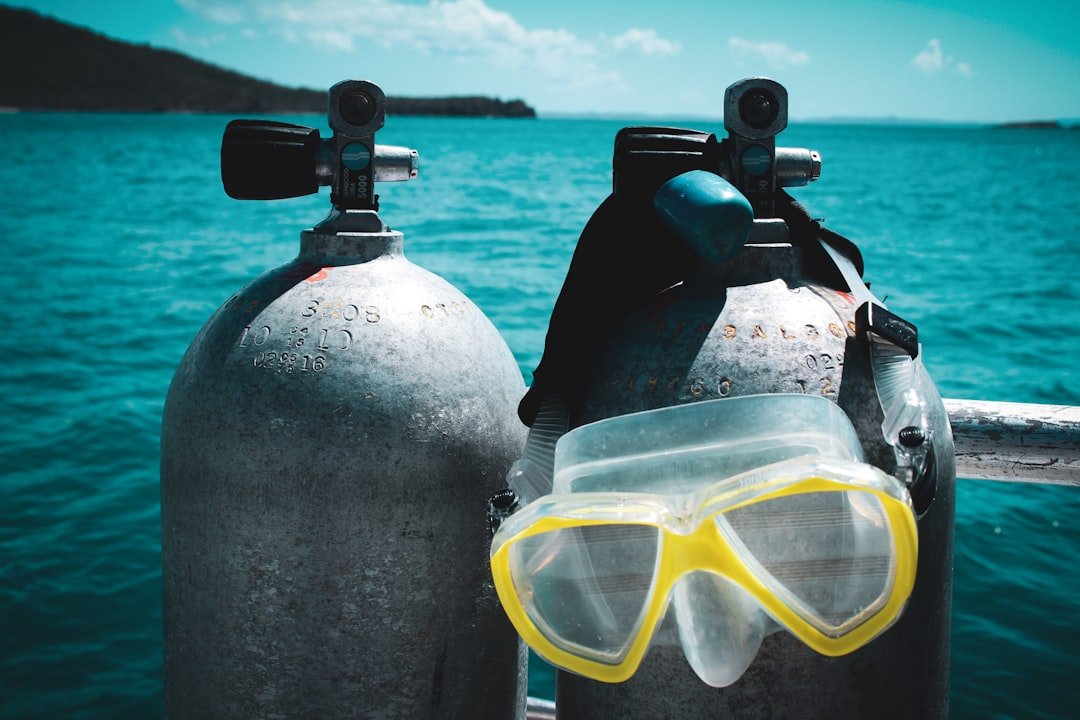
For a typical day of repeated recreational dives at moderate depths, take an enriched-air nitrox course and choose EAN32 when the planned depth stays within its maximum operating depth. That is the practical answer to nitrox vs air diving for most vacation and local divers. Nitrox gives you less nitrogen exposure at the same depth, which usually gives your computer more no-decompression time and can make repetitive-dive planning easier. It does not let you dive deeper, skip safety stops, or cut surface intervals short.
The clear recommendation for nitrox vs air diving
If you are planning two dives in a day on reefs, wrecks, or other sites shallower than about 30 m or 100 ft, certified nitrox use is usually the better pick. EAN32 is widely available at many dive destinations, has a manageable depth limit for common recreational profiles, and offers a useful nitrogen-loading advantage over air.
Choose air when the dive is deep, when the operator only has air, when the nitrox surcharge does not fit your budget, or when you have not completed enriched-air training. Air is also the better option for a dive that may exceed the oxygen limit of the available nitrox blend. The gas has more nitrogen, but its lower oxygen percentage gives it a much deeper oxygen exposure limit.
The decision is not about which gas is safer in every situation. Each gas has a different planning limit. Nitrox reduces decompression stress on the nitrogen side of the equation. It also raises oxygen exposure. Your depth, your mix, your computer settings, and the actual dive profile decide which advantage matters.
Air and nitrox at a glance
| Planning point | Air | EAN32 | EAN36 |
|---|---|---|---|
| Oxygen percentage | About 21% | 32% | 36% |
| Nitrogen percentage | About 79% | 68% | 64% |
| Nitrogen loading at the same depth | Baseline | Lower than air | Lower than EAN32 |
| Approximate maximum operating depth at 1.4 ATA PO2, seawater | 57 m / 187 ft, beyond normal recreational limits | 34 m / 111 ft | 29 m / 95 ft |
| Typical use | Deep recreational profiles, simple dives, universal availability | Repeated dives at moderate depths | Shallower repeated dives |
| Main error to avoid | Assuming a longer no-decompression limit than your computer permits | Exceeding the blend’s depth limit | Taking it too deep because it has less nitrogen |
EAN means enriched air nitrox, and the number is the oxygen percentage. EAN32 contains 32% oxygen. EAN36 contains 36%. A cylinder marked nitrox is not enough information by itself. The actual oxygen percentage may vary slightly from the nominal blend, so divers analyze the cylinder, label it, and set the exact percentage in their computer before entering the water.
What actually changes underwater
Less nitrogen goes into your tissues
At the same depth, EAN32 has less nitrogen than air. Your body therefore takes on nitrogen more slowly during the dive. Recreational dive computers use this lower nitrogen fraction when calculating no-decompression limits and repetitive-dive loading.
That benefit is strongest when you stay at a moderate depth for meaningful bottom time or make another dive later in the day. If you are doing a short, shallow dive where your air no-decompression limit is already far longer than your planned dive, nitrox may not change much in practical terms. You still get the reduced nitrogen exposure, but it may not alter the dive plan.
Oxygen becomes the limiting factor sooner
The tradeoff is oxygen partial pressure, usually written as PO2. Pressure increases with depth. A higher oxygen fraction reaches a chosen PO2 limit at a shallower depth than air. This is why EAN36 is useful for a shallow reef profile but a poor choice for a 30 m or 100 ft wreck dive.
Many recreational nitrox plans use a PO2 of 1.4 ATA to calculate maximum operating depth. That gives EAN32 an approximate MOD of 34 m or 111 ft in seawater, while EAN36 reaches that limit at about 29 m or 95 ft. Your agency, instructor, operator, and computer may use specific procedures or limits, so use the one taught in your course and verify the plan before diving.
Breathing a mix below its MOD does not make a dive automatically safe. Oxygen toxicity risk depends on partial pressure and exposure time, among other factors. A serious central nervous system oxygen-toxicity event can include a seizure underwater. That is why analyzing the gas and setting the computer correctly are non-negotiable habits, not paperwork.
Nitrox does not make you less narced
A common claim is that nitrox feels less narcotic than air. For planning purposes, do not count on that. Recreational divers should treat nitrogen narcosis risk at a given depth as essentially similar unless they have specific training and a conservative plan that says otherwise. Nitrox is not a depth-gas shortcut.
Why EAN32 wins for common recreational diving
EAN32 fits many real dive days well. Think of a first dive around 20 to 28 m, followed by a shallower reef dive. With air, the deeper first dive can create enough nitrogen loading that the second dive has a noticeably tighter no-decompression limit. With EAN32, your computer will generally give more flexibility because it is tracking less nitrogen exposure.
That does not mean you should use every extra minute your computer offers. A sensible plan still leaves margin for delays, current, a slow group, an interesting animal, and a gradual ascent. The useful part of nitrox is often the buffer. You can follow the same conservative dive profile as your air-diving buddy while carrying less nitrogen load.
I would prioritize nitrox for liveaboard schedules, resort weeks with several boat dives, and local weekends with repeated moderate-depth dives. It is particularly handy when the second dive is not very shallow. If the operator offers EAN32, your certification is current, and the dive stays above its MOD, it is the blend I would normally select.
Do not choose nitrox because someone says it prevents fatigue, dehydration, hangovers, or seasickness. Those claims are not a safe basis for gas selection. Sleep, hydration, exertion, heat, motion, alcohol, illness, and your actual dive profile all affect how you feel after diving. If you have unusual fatigue or any medical concern, speak with a doctor familiar with diving medicine.
When air is the better choice
Air wins when the dive plan is deeper than the nitrox blend’s MOD. A planned 35 m or 115 ft dive is outside a standard EAN32 plan based on a 1.4 ATA PO2 limit. Air is the sensible recreational choice in that situation, assuming the dive is within your training, local rules, computer limits, and conditions.
Air also makes sense for a single shallow dive. If your planned 45-minute dive at 12 m or 40 ft is well inside your air computer’s no-decompression limit, a paid nitrox fill may provide little practical value. There is no prize for using a higher oxygen mix when it does not improve the plan.
Logistics can decide it too. Some remote operations have only air. Others have nitrox but restrict blends, require proof of certification, or charge per cylinder. Prices vary by region, so ask the operator before your trip which blends it supplies, whether tanks are analyzed with you present, and what the current surcharge is.
How to choose the right blend
- Start with the deepest planned point. Use the actual maximum depth of the dive, not the average depth you hope to achieve. Allow for a little depth variation during descent, current, or a missed turn around a wreck.
- Pick a mix with an MOD deeper than that point. EAN32 is often appropriate for moderate-depth dives. EAN36 is better reserved for shallower profiles.
- Check the entire day, not only the first dive. A blend that works nicely for the afternoon reef dive may be wrong for the deeper morning dive.
- Analyze every cylinder yourself or observe the process required by the operator. Read the analyzer carefully, record the result, and compare it with the cylinder label.
- Set the exact oxygen percentage in your computer before diving. Check the display again during your pre-dive routine. If you change cylinders, confirm the computer setting matches the new cylinder.
A dive computer can calculate nitrogen loading and oxygen exposure only when the input is correct. Setting EAN32 when the cylinder actually contains EAN36 can understate oxygen exposure. Setting the wrong mix in either direction defeats the reason for using a computer in the first place.
Gear and filling considerations
For the common recreational blends up to 40% oxygen, many modern recreational regulators and computers are approved for nitrox use. Confirm this in the manufacturer manual for your exact model. A shop may also have local oxygen-cleaning rules or fill-station requirements. Do not assume that a regulator is suitable merely because a friend uses a similar one with nitrox.
You do not need a special nitrox-only computer. You do need a computer that supports the blend you plan to use and lets you set the oxygen percentage. Check its maximum programmable oxygen fraction before buying or traveling. If you dive with a backup computer, make sure it is set to the same mix and that you understand how it calculates a missed or different profile.
Pay attention to cylinder markings. Nitrox cylinders are commonly identified with a green-and-yellow band or equivalent local marking, but labels and valve arrangements vary. The analyzed oxygen percentage, MOD, fill date, and diver identification are the information that matters on the actual cylinder. Never rely only on a color scheme.
Common nitrox mistakes to avoid
- Using the planned blend without personally confirming the analyzed oxygen percentage.
- Following a buddy deeper than the MOD for your cylinder.
- Leaving yesterday’s computer setting in place after switching gases.
- Using nitrox no-decompression time as a reason to skip a conservative ascent or safety stop.
- Assuming nitrox changes flying-after-diving guidance. Follow the same conservative surface-interval guidance taught by your agency, operator, and computer.
FAQ
Is nitrox safer than air?
Nitrox can reduce nitrogen loading at the same depth, which is useful on repeated recreational dives. It also creates a shallower oxygen depth limit. It is safer only when the blend is appropriate for the profile, the cylinder is analyzed correctly, and the dive stays within the established limits. Neither gas replaces sound buoyancy, ascent control, planning, or training.
Does nitrox give you more bottom time?
Usually, at moderate depths, yes. Your computer may give a longer no-decompression limit because the mix contains less nitrogen than air. The extra time disappears if oxygen exposure, the blend’s MOD, your planned turnaround pressure, current, buddy needs, or the boat schedule becomes the real limit first.
Can I use nitrox without a nitrox certification?
Do not plan on it. Most reputable operators require enriched-air certification before supplying nitrox, and the course teaches the analysis, labeling, MOD, and computer procedures that prevent high-consequence mistakes. Ask a certified instructor about an enriched-air course rather than trying to learn the process informally on a trip.
Should I use EAN32 or EAN36?
Choose based on maximum depth. EAN32 is the more flexible recreational option because its approximate 1.4 ATA MOD is 34 m or 111 ft. EAN36 has a shallower approximate MOD of 29 m or 95 ft, so it fits shallower dives where you want lower nitrogen exposure. Use the blend your training and dive plan support.
Can I set my computer to air and still breathe nitrox?
No. Setting an air mode while breathing nitrox makes the computer track a more conservative nitrogen load, but it does not track the oxygen exposure for your actual mix. You lose a critical warning and can miss the MOD calculation. Set the analyzed oxygen percentage before every nitrox dive.
For most certified recreational divers, the bottom line is simple: use EAN32 for repeated moderate-depth dives, and use air for deeper profiles or when nitrox adds no real planning advantage. Treat every fill as a separate verification task. The right gas is the one that matches the deepest point of your actual plan.
Related posts
This article is for general informational purposes only and is not dive training or medical advice. Always train with a certified instructor and consult a doctor before diving if you have any health concerns. Gear specs, pricing, site conditions, and operator schedules change, so verify current details directly with the manufacturer or dive operator.
Disclosure: This post may contain affiliate links. If you click through and make a purchase, we may earn a commission at no extra cost to you. We only recommend gear we’ve researched or genuinely believe in.