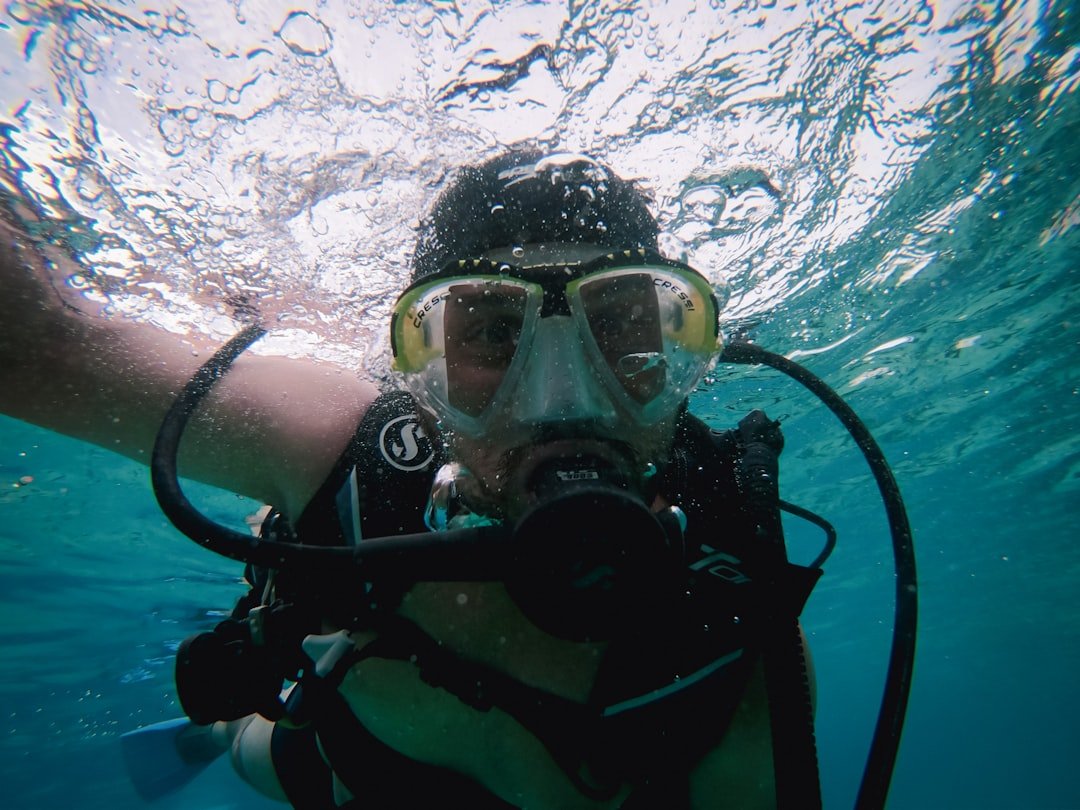
You are packing for a normal two-dive boat day, the operator has rental cylinders ready, and your dive buddy wants to see a reef at 18 metres before lunch. In that situation, rebreather vs open circuit diving has a clear answer for most people: use open-circuit scuba. It is familiar, broadly supported, quicker to prepare, and far easier to rent, service, travel with, and troubleshoot. Rebreather vs open circuit diving changes when your planned dives need unusually long time underwater, low bubble noise, or a technical profile that makes gas efficiency worth the extra work.
Open circuit wins for the common recreational case. A closed-circuit rebreather, usually called a CCR, wins when a properly trained diver has a repeatable reason to accept more cost, more pre-dive discipline, more equipment bulk, and a larger failure-management burden. The question is not which unit is more advanced. It is which system fits the dives you actually make.
Rebreather vs open circuit diving at a glance
| Factor | Open-circuit scuba | Closed-circuit rebreather |
|---|---|---|
| Exhaled gas | Released as bubbles | Usually recirculated after carbon dioxide removal |
| Gas use | Higher, especially deep | Much lower on many profiles |
| Noise and bubbles | Noticeable bubbles and exhaust noise | Very quiet, with little or no normal bubble stream |
| Equipment cost | Lower entry cost and widespread rental access | High purchase, training, service, and consumable costs |
| Preparation | Relatively simple assembly and checks | Detailed assembly, calibration, packing, testing, and verification |
| Failure response | Generally direct: breathe an alternate gas source or end the dive | Requires specific trained responses, often including bailout to open circuit |
| Travel and operators | Easy to arrange in most dive destinations | Support varies greatly and may require advance approval |
| Best fit | Most recreational shore, boat, and vacation diving | Dedicated technical, scientific, photography, and long-duration diving |
Why open circuit is the better default
Open-circuit scuba sends each exhalation into the water. Your cylinder contains compressed breathing gas, your regulator reduces its pressure, and the gas leaves through the exhaust valve after each breath. The system wastes a lot of gas compared with a rebreather. That inefficiency is also part of its appeal. The gas path is simple, familiar, and visible in a practical sense. If the cylinder is low, you read the pressure gauge. If a regulator has a serious problem, the usual trained response is based on switching to a known breathing source and ending or aborting the dive.
That does not make open circuit risk-free. Every scuba system needs proper maintenance, pre-dive checks, gas planning, buoyancy control, and a trained buddy approach. Still, the failure modes are easier for a recreational diver to understand. Most divers have practiced out-of-air drills, alternate-air-source use, controlled ascents, and basic regulator problems during entry-level training. Those skills do not cover every emergency, but they create a useful baseline.
Availability matters more than many buyers expect. Nearly every dive center can fill common cylinders, rent a regulator set, and support an open-circuit diver. On holiday, you can often travel with only a mask, computer, exposure protection, and personal regulator if you prefer your own. The operator supplies tanks and weights. A rebreather trip needs more planning. You may need oxygen, diluent, absorbent material, suitable cylinders, a compatible filling setup, a place to prepare the unit, and an operator willing to accommodate CCR diving.
The cost gap is substantial. A decent recreational open-circuit kit can be assembled in stages, and used gear is common if it has an inspectable service history. A CCR involves the unit, dedicated training, sensors, breathing loop parts, cylinders, bailout configuration, travel arrangements, periodic service, and consumables such as carbon dioxide absorbent. Prices vary by region, model, and configuration, so check manufacturers and local dealers before budgeting. The broad reality is simple: a CCR is a major commitment, not a slightly fancier regulator setup.
Open circuit also keeps the mental workload lower. You still monitor depth, time, gas, buoyancy, navigation, buddy position, current, and ascent obligations. With a CCR, you add constant awareness of the breathing loop and its electronics or displays, oxygen control, absorbent duration, gas supply, and bailout readiness. A well-trained CCR diver makes that workload routine through repetition. A diver who only gets wet a few times each year may find it harder to keep those skills sharp.
What a rebreather changes underwater
A closed-circuit rebreather recycles most of the gas you breathe out. The loop passes exhaled gas through absorbent material that removes carbon dioxide. The unit adds oxygen to replace what your body metabolizes, while diluent helps manage loop volume and breathable gas composition. Electronic CCRs use sensors and controls to maintain a selected oxygen partial pressure. Manual and hybrid designs also exist, but the core point remains the same: you are breathing from a loop that needs active management.
The payoff can be dramatic on the right dive. Because the CCR replaces only a relatively small amount of oxygen compared with the volume breathed, gas endurance can be much better than open circuit. That matters on long decompression dives, cave penetration, extended wreck dives, and remote expeditions where carrying enough open-circuit gas becomes awkward. It can also matter to photographers and wildlife observers. Many marine animals react differently to a diver without a regular stream of bubbles. The quiet is real. It changes the feel of the dive.
Bubble-free diving has practical benefits beyond photography. A CCR can make it easier to hold position around shy subjects, and less exhaust noise may improve communication with a buddy at close range. There is no giant cloud of bubbles obscuring your view beneath a wreck ceiling or drifting through a camera composition. Those benefits are compelling if they connect directly to your diving goals. They are less compelling if your usual dives last 45 minutes on a local reef where standard cylinders are plentiful.
A CCR also can maintain a more consistent oxygen partial pressure during a dive than an open-circuit gas mix can. That can improve decompression efficiency when the unit is operated within its training, planning, and manufacturer limits. It does not grant extra bottom time for free. Depth limits, decompression obligations, cold, workload, current, gas reserves, and site rules still apply. A dive computer does not replace understanding the plan or carrying the required bailout gas.
The downside is that a CCR can fail in ways that are harder to detect. Carbon dioxide scrubber problems, oxygen sensor faults, electronics problems, water entering the loop, a stuck gas addition system, incorrect assembly, and depleted gas supplies can become serious quickly. Some faults provide weak or misleading warning signs. Carbon dioxide retention, hypoxia, and excessive oxygen partial pressure can incapacitate a diver. These are life-threatening hazards, not reasons to experiment with a unit after watching videos or reading a manual.
Formal model-specific training is essential before using any rebreather. Training should include the exact unit, its configuration, its pre-dive preparation, its monitoring system, emergency drills, bailout planning, and cleaning requirements. If you already own an open-circuit kit and are considering CCR training, speak with a certified rebreather instructor who teaches the model you are considering. Discuss your recent dive volume, buoyancy, trim, comfort with task loading, and the kind of dives you genuinely plan to make.
The hidden commitment of CCR ownership
The time commitment is often the deciding factor. A rebreather dive begins well before the boat leaves the dock. The unit needs careful assembly according to the manufacturer’s instructions. The scrubber needs correct handling. Sensors need verification or calibration where the model requires it. Cylinders need the correct gases and pressures. The loop, counterlungs, hoses, valves, electronics, and displays need checks. That process is not optional busywork. It is a safety barrier.
After the dive, the work continues. The loop must be cleaned and dried according to the manufacturer’s guidance. Consumables need tracking. Sensors have service lives. O-rings, valves, batteries, hoses, and other components need inspection. The unit may have software updates or factory-required servicing. Skip maintenance because a unit looked fine last time, and you have removed one of the defenses that makes CCR diving viable.
Travel can be awkward as well. Some divers travel successfully with a CCR, but it takes planning. Airlines have battery rules. Operators may not have oxygen, diluent, absorbent, or a trained support person available. Local regulations and filling practices vary. A remote liveaboard may welcome rebreathers, limit them to certain profiles, or decline them altogether. Ask before paying a deposit. Ask whether the operator supplies oxygen and absorbent, whether they can fill the required cylinders, what bailout gas arrangements they expect, and whether there are limits on depth or penetration.
Bailout is another reality that newcomers sometimes underestimate. A CCR diver does not leave open circuit behind. They carry open-circuit bailout gas appropriate to the planned depth, route, decompression obligation, and credible emergency scenario. On deeper or overhead dives, bailout requirements can become bulky and expensive. The compact image of a rebreather diver can be misleading. For demanding dives, the full system may include multiple cylinders and a carefully planned gas strategy.
That is why a CCR is rarely a shortcut to deep diving. It can support ambitious dives for trained, experienced divers who have built the necessary skills and infrastructure. It also raises the consequence of poor preparation. A new rebreather owner should expect supervised experience-building dives after the course, not immediate complex expeditions. Keep conditions easy, stay within the course limits, and follow the instructor’s progression plan.
When a rebreather is the better choice
Choose a CCR if you have a specific, recurring need for it. Long technical dives are the clearest example. Gas efficiency can reduce the number of open-circuit cylinders needed for certain profiles, though bailout still remains essential. Frequent deep decompression diving may also make the investment easier to justify over time if you have reliable local gas support and dive regularly enough to maintain proficiency.
Underwater photographers and videographers may also have a strong case. Silence and the lack of a bubble stream can improve opportunities with cautious animals and make close work easier. The benefit depends on subject behavior and site conditions. A turtle on a busy shallow reef may not care. A sensitive animal in calm water might. The diver still needs solid buoyancy and situational awareness. A rebreather cannot compensate for poor positioning or rushed finning.
Scientific, survey, military, and professional applications use rebreathers for reasons that go beyond recreational convenience, but those fields have their own training, procedures, and organizational support. Recreational divers should not assume that equipment used in those settings fits a vacation-diving routine. The same is true for cave and wreck exploration. A CCR can be valuable there, but overhead environments sharply increase the penalty for mistakes. Seek appropriate certified training before entering any overhead environment.
A rebreather is also a reasonable choice for a committed local diver who makes many CCR-suited dives each year, has access to service and fills, and enjoys the preparation process. Some divers genuinely prefer the methodical routine. They like maintaining equipment, logging consumables, and practicing drills. That attitude matters. If the preparation feels like a chore before purchase, it will probably feel worse after the novelty fades.
When open circuit wins even for experienced divers
Open circuit is still the right tool for many advanced dives. It is usually better for casual resort trips, occasional boat diving, training weekends, and sites with limited gas infrastructure. It can also be the better option when you have not dived recently enough to feel current on CCR-specific procedures. There is no shame in leaving the rebreather at home. Choosing the system that matches your recent practice is sound judgment.
Some environments are rough on complex gear. Surf entries, heavy shore carries, silty shallow water, cold-weather logistics, and cramped small boats can make a straightforward open-circuit setup more attractive. A CCR can be used in challenging conditions by trained divers, but the additional setup, cleaning, and protection needs do not disappear. If your dive plan is a simple 12-metre shore dive with a friend, a standard cylinder and dependable regulator often deliver everything needed.
Open circuit is also easier for buddy teams. Two divers using similar equipment can communicate their gas status quickly and share familiar emergency procedures. Mixed teams can dive safely with planning, but the open-circuit buddy needs to understand that a CCR diver’s bailout gas is planned for a specific purpose and may not be spare gas for an unplanned situation. Discuss gas reserves, ascent strategy, separation procedures, and emergency expectations before entering the water.
Rental access remains a major advantage. If a regulator is damaged during a trip, many dive centers can offer a replacement. If a CCR component fails, a compatible replacement may be unavailable. That can end a rebreather trip even when the diving is excellent. Bringing backup parts helps, but it adds expense and packing complexity. For divers who value flexibility, open circuit has a very practical edge.
How to decide before spending money
Start with your last year of diving, not an ideal future version of it. Write down how often you dive, typical depth, usual bottom time, water temperature, travel pattern, and whether you make decompression dives. Then identify the exact limitation you want to solve. If the answer is simply “I want longer dives,” check whether better gas planning, a larger cylinder where appropriate, sidemount training, a suitable exposure suit, or improved buoyancy would address the issue at far lower cost. Discuss options with a certified instructor or local dive professional who knows your conditions.
Next, assess access. Is there a nearby instructor for the specific CCR model? Is authorized service practical? Can you obtain oxygen, diluent, and absorbent reliably? Are there dive buddies who use CCRs responsibly, or will you be alone with a complicated system? A good local support network has real value. Buying a discounted unit without nearby training or service can create a costly problem.
Finally, be honest about attention and routine. CCR diving rewards disciplined preparation every time. It punishes assumptions. Open circuit also needs care, but it asks less of the diver between dives and while underwater. For the recreational diver who wants to dive more often with less logistical friction, open circuit is the recommendation.
Pick a rebreather when your dives repeatedly demand what it does well and you are ready to train, practice, maintain, and plan for its limits. Pick open circuit for normal recreational diving, travel, rentals, and uncomplicated fun. More bubbles are a small price for a system that gets you in the water reliably.
Related posts
This article is for general informational purposes only and is not dive training or medical advice. Always train with a certified instructor and consult a doctor before diving if you have any health concerns. Gear specs, pricing, site conditions, and operator schedules change, so verify current details directly with the manufacturer or dive operator.
Disclosure: This post may contain affiliate links. If you click through and make a purchase, we may earn a commission at no extra cost to you. We only recommend gear we’ve researched or genuinely believe in.