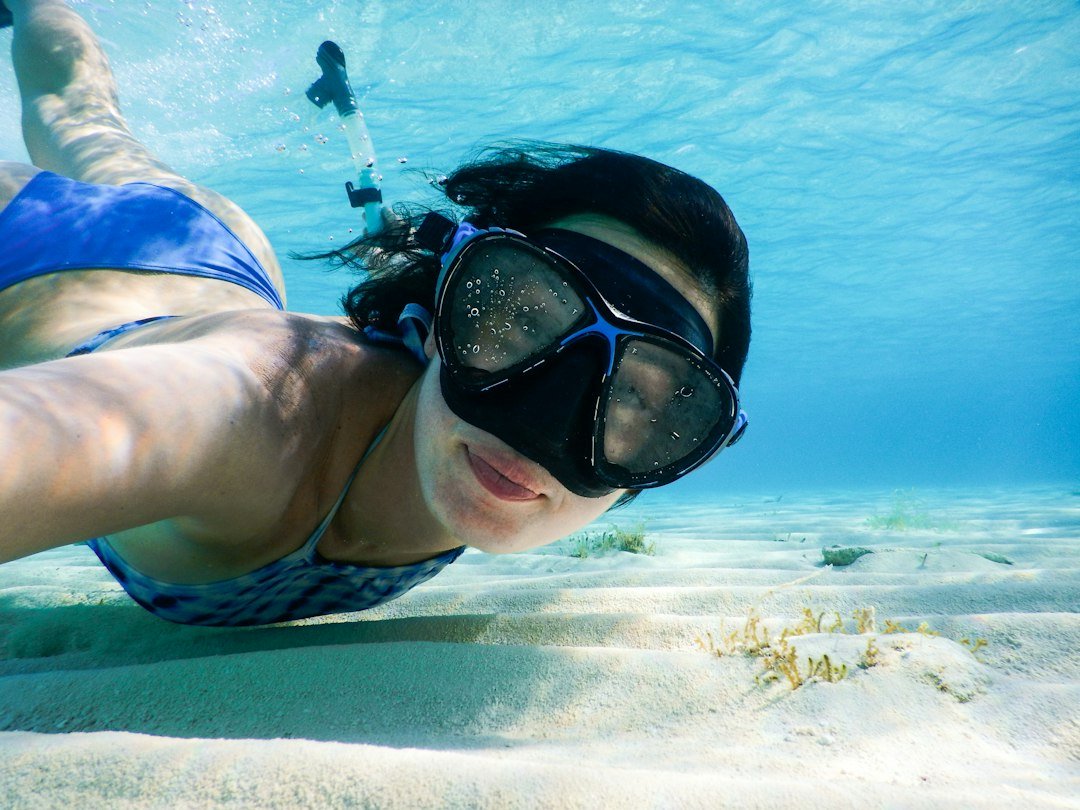
Can you scuba dive while wearing contacts? Usually, yes, if you use soft lenses and can manage a flooded mask without rubbing your eyes. You are packing for a boat dive, your glasses will not fit under the mask skirt, and you still need to read the gauge and see the reef. That is the everyday problem. Can you scuba dive while wearing contacts comfortably? Many divers do, but a few practical choices make a big difference.
A properly fitted dive mask has an air space in front of your eyes, so normal vision correction works underwater much like it does on land. The mask matters. Without that air space, water changes how light bends and your vision becomes blurry even if you have perfect eyesight. Contacts correct your own focusing error, while the mask lets your eyes use that correction normally.
Can you scuba dive while wearing contacts safely?
Soft contact lenses are generally the common choice for diving, particularly daily disposable lenses. They sit against the eye and are less likely than rigid lenses to create pressure-related problems during ascent. Still, they are not risk-free. A mask flood can wash a lens out, and water trapped against a lens may irritate the eye or expose it to microorganisms.
Use a mask that seals well. That simple detail reduces most contact-lens hassle underwater. A small trickle during a descent is one thing, but repeated full floods make lens loss more likely and can leave your eyes uncomfortable for the rest of the day.
Rigid gas-permeable lenses and older hard lenses need more caution. Gas can collect beneath a rigid lens as ambient pressure drops during ascent, which may cause pain, blurred vision, or damage to the surface of the eye. Skip the guesswork. Ask an eye-care professional who understands diving medicine before using rigid lenses underwater, and tell your instructor before training if you rely on them.
Do not confuse contacts with dive training. Every entry-level diver needs to learn how to clear water from a mask and briefly remove and replace it, whether they wear correction or not. Practice changes the equation. A diver who panics at a mask flood is at greater risk than a diver who loses a contact lens but calmly completes the skill.
Risks of diving with contact lenses
The most obvious risk is losing a lens. If water enters the mask, a soft lens can fold, shift, or wash away. This is inconvenient on a shallow guided dive. It becomes a bigger issue if your uncorrected vision makes it hard to read instruments, identify your buddy, or navigate back to the exit point.
Water exposure is the health concern. Lakes, pools, oceans, and rinse buckets all contain material you do not want held against your cornea by a lens. Contact lens wearers can develop eye infections after water exposure, and some infections can be serious. The risk is not a reason to panic. It is a reason to avoid opening your eyes underwater and to take irritation seriously after the dive.
Salt water may sting. Chlorinated pool water can also dry the eye and irritate a lens, especially during long confined-water sessions. Freshwater deserves the same care. Do not assume a clear mountain lake or a clean-looking rinse tank is safe for contact lenses.
Dryness can catch divers out too. Wind on a boat, sunscreen vapor, dehydration, and air-conditioned transport can leave lenses feeling scratchy before you even enter the water. A dry lens is easier to dislodge. Bring approved lubricating drops if they are part of your normal eye-care routine, but do not treat drops as a fix for worsening pain or redness.
There is also a judgment issue. If a lens moves during the dive, do not try to adjust it underwater with wet fingers. End the dive normally if you can do so safely with your buddy, then deal with the lens on the surface. Vision is not worth improvising over.
Soft contacts, rigid lenses, and prescription masks
| Option | What works well | Main drawback | Best fit |
|---|---|---|---|
| Daily disposable soft contacts | Convenient and easy to replace after water exposure | Can wash out during a mask flood | Divers with a stable soft-lens prescription |
| Reusable soft contacts | Useful if you already wear them comfortably | Need careful cleaning after accidental exposure | Regular contact wearers following eye-care advice |
| Rigid gas-permeable lenses | May give excellent land vision for some wearers | Pressure-related concerns under the lens | Only with specific medical guidance |
| Prescription dive mask | No lens touches the eye and no contact can wash out | Costs more and is specific to one mask | Divers who dislike contacts or need a dependable backup |
A prescription dive mask is the cleanest alternative for many people. It uses corrective lenses built into, bonded to, or installed inside a standard dive mask. No contact lens touches your eye. If your mask floods, you may still have blurry vision for a moment, but you do not risk losing your actual correction.
Some masks accept interchangeable corrective inserts in fixed diopter steps. Those are often practical for simple near-sighted or far-sighted prescriptions. Astigmatism is harder. You may need custom lenses if a standard insert does not give usable clarity, so compare your current prescription with the mask maker’s available lens options before ordering.
Prescription masks need fit testing first. A perfect lens is useless in a mask that leaks around your forehead or upper lip. Try the bare mask against your face without using the strap, inhale gently through your nose, and see whether it stays in place for a few seconds. That is only a first check. Test it in water before relying on it for a trip.
Regular eyeglasses do not work under a dive mask. The temple arms break the silicone skirt seal, and the frame can press painfully into your face. Leave them on the boat. Carry them in a hard case for surface intervals and travel instead.
How to reduce problems before the dive
Make the decision before you get wet. Do not first test a new lens type on a current-prone wall dive or a dark night dive. Start in a pool or calm, shallow site during supervised training. Keep it simple.
- Wear a fresh pair of soft lenses if you normally use daily disposables.
- Pack a spare pair, your glasses, and a clean lens case if applicable.
- Check that your mask seals before the dive, then use defog carefully so none gets on the contacts.
- Tell your buddy that you wear contacts and may need to end the dive if one is lost.
- Practice mask clearing with your eyes closed or looking slightly upward, as taught in your course.
- After the dive, remove lenses with clean, dry hands and follow your eye-care professional’s cleaning guidance.
That last step has real value. If a daily disposable lens had water exposure, many divers choose to discard it after the dive rather than wear it again. For reusable lenses, follow the lens manufacturer’s instructions and the advice of your eye-care professional. Do not rinse lenses in tap water, bottled water, or saline made for nasal use.
A small backup plan helps. If you need strong correction to read a computer screen, compass, or camera settings, bring your prescription mask or a second compatible mask on dive travel. A lost lens on day one should not end a week of diving. Prices vary by region, and prescription-mask lens systems can range from relatively affordable inserts to custom work that costs much more.
What to do if your mask floods
Stay with your buddy. Breathe slowly from your regulator and use the mask-clearing method you learned in training. Avoid squeezing your eyes shut so hard that you create panic or lose awareness of what your hands are doing.
If water enters the mask and your lenses stay put, clear the mask and assess how your eyes feel. Continue only if you have clear vision, no significant pain, and normal control of the dive. A little saltwater sting may settle after surfacing. Persistent sharp pain is different.
If you lose one contact, signal your buddy and end the dive in a controlled way. Do not rush upward. Follow the ascent procedures you were taught, including any required safety stop when conditions and your training allow. Once on the surface, switch to glasses or a spare lens only after your hands are clean and dry.
After any suspected eye exposure, remove the lens as soon as practical. Seek prompt medical advice for worsening redness, pain, light sensitivity, discharge, blurred vision that does not clear, or the feeling that something remains in the eye. Do not dive again with those symptoms. An optometrist or ophthalmologist can assess the cause, and a qualified dive professional can help you plan a safe return after medical clearance.
When contacts are not the best choice
Skip contacts for that day if you already have a red, painful, infected, or unusually dry eye. The water will not improve it. Recent eye surgery, corneal disease, significant dry-eye symptoms, glaucoma treatment, retinal conditions, or sudden changes in vision all deserve individual advice from the clinician managing your eyes before diving.
A prescription mask may also be the better route if you dislike touching your eyes, have repeatedly lost contacts during mask skills, or dive in conditions where immediate clear vision is especially useful. Cold water and low visibility make small equipment annoyances feel larger. Reliable correction reduces one variable.
For many divers, soft contacts plus a well-fitting mask are a workable setup. Daily disposables, calm mask skills, and a backup pair are a sensible combination. But if your lenses are rigid, your eyes react badly to water exposure, or you cannot comfortably complete mask drills, pause and get advice from a certified instructor and eye-care professional before your next dive.
Related posts
This article is for general informational purposes only and is not dive training or medical advice. Always train with a certified instructor and consult a doctor before diving if you have any health concerns. Gear specs, pricing, site conditions, and operator schedules change, so verify current details directly with the manufacturer or dive operator.
Disclosure: This post may contain affiliate links. If you click through and make a purchase, we may earn a commission at no extra cost to you. We only recommend gear we’ve researched or genuinely believe in.