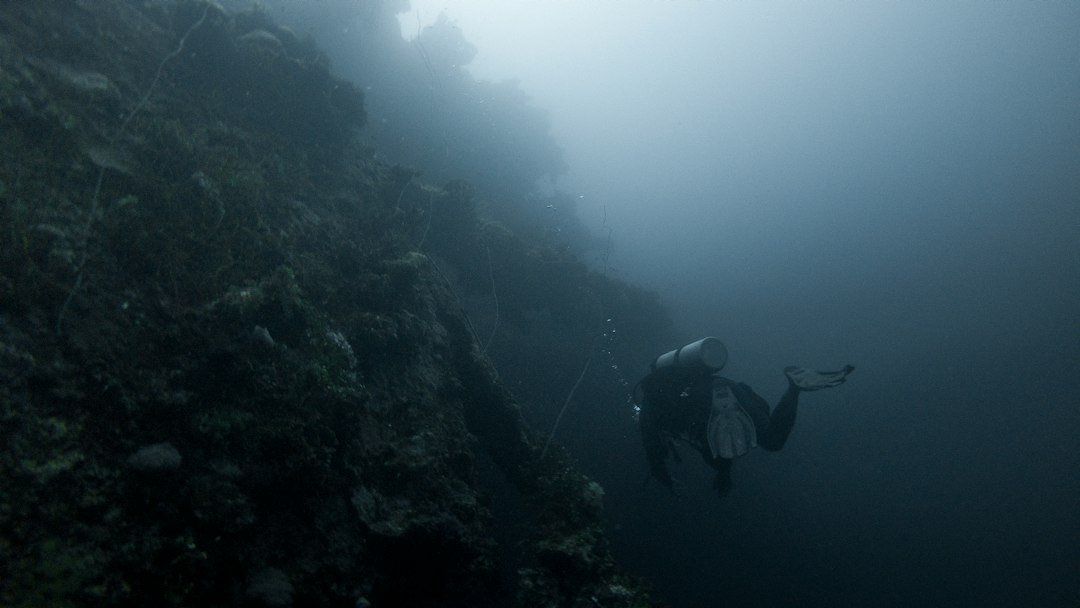
You check your gauge near the reef and it reads empty: what to do if you run out of air while diving is signal your buddy, take a working regulator, and make the controlled ascent you learned in training. Act early. The exact answer to what to do if you run out of air while diving depends on whether a buddy is close enough to share gas, how deep you are, and whether you can reach the surface safely under your training procedures.
Do not hold your breath. A breath-hold during ascent can injure your lungs because expanding gas needs a way out, even after a shallow ascent. Keep exhaling steadily if you are ascending without a regulator, follow the ascent method taught by your certified instructor, and get medical assessment promptly if you have chest pain, unusual shortness of breath, coughing blood, confusion, weakness, or other symptoms after a diving emergency.
What to do if you run out of air while diving
The best response is usually to get gas from your buddy. That is why buddy position matters more than a fancy accessory clipped somewhere on your kit. If your regulator delivers no breathable gas, get your buddy’s attention with the out-of-air hand signal, which is a flat hand moving across the throat, then point to their alternate second stage or accept the regulator they offer.
Make contact. Hold onto a stable part of your buddy’s equipment if conditions require it, without pulling on a hose or inflator. Breathe slowly from the donated regulator, establish that both divers are stable, then begin the ascent together at the rate and route covered in your training.
A buddy-gas ascent is generally preferred when it is immediately available because you have a continuing air supply while managing buoyancy and depth. Your buddy should control their own buoyancy, and you should control yours. Do not depend on one person to operate both sets of equipment unless your training specifically covered that situation.
Recognize low air before it becomes no air
Most out-of-air events begin as an avoidable low-air event. Check your pressure gauge regularly, especially after descending, before leaving the main part of a site, after a change in current, and whenever your breathing rate rises. Look at it. A gauge buried under a console or tucked behind an arm is easy to ignore.
Agree on a turn pressure before entering the water. The number should leave enough gas for your planned exit, a safety margin, and a problem such as a slower-than-expected swim back to the boat or shore. Your reserve needs more thought in cold water, current, deeper profiles, poor visibility, or when a newer diver is using gas faster than expected.
When you reach the agreed turn pressure, tell your buddy and start back. Do not negotiate with the gauge. If you are low on air but still breathing normally, show the low-on-air signal, stay with your buddy, end the dive, and ascend according to the plan.
Emergency procedures when a buddy is nearby
Practice makes the first few seconds less chaotic. The following sequence is a useful memory prompt, but it does not replace the emergency procedures taught in a certified scuba course.
- Signal out of air. Get your buddy’s attention first. Use the throat-cut signal rather than waving vaguely.
- Take the offered gas source. Purge only if needed, clear it as trained, and take a cautious first breath. Keep the mouthpiece secure.
- Confirm you can breathe. Make eye contact and use the okay signal once breathing is established. Stay close.
- Ascend together. Follow the planned exit or the ascent procedure appropriate to the situation. Keep breathing continuously.
- Surface and end the dive. Inflate your BCD orally or with available gas when appropriate, establish positive buoyancy, and signal for help if needed.
Do not rush upward in a panic. A rapid ascent can create a second emergency, while struggling for a regulator can make buoyancy control worse. Slow down enough to breathe. Your buddy may need a moment to locate and present their alternate second stage correctly.
When you cannot reach a buddy
If you are truly out of breathing gas and cannot reach a buddy or other working gas source, use the emergency ascent technique you learned and practiced with a certified instructor. This may be taught as a controlled emergency swimming ascent, often called a CESA. It is a last-resort response. It is not something to improvise from a blog post.
During a trained emergency ascent, the priorities are to orient toward the surface, maintain continuous exhalation, control buoyancy, and avoid obstacles such as a boat hull, overhead structure, or entanglement. Look up. If you are under a ceiling, inside a wreck, in a cave, or beneath ice, a direct ascent may be impossible and requires specialized training and planning.
Drop weights only if your training and immediate situation make that the safest choice. A weight ditch can create an uncontrolled ascent, and losing integrated weights or a belt may complicate recovery. At the surface, establish positive buoyancy, signal distress, and do not descend again to retrieve equipment.
Why alternate air sources need checking
Your alternate second stage is only useful if it works, is easy to find, and is not dragging through sand. Test-breathe it before each dive as part of your normal regulator check. Keep it secured in the consistent location you and your buddy agreed on.
Some divers use a conventional octopus on a longer or standard hose. Others use an integrated inflator regulator or a long-hose donation setup. Each arrangement needs practice with the buddy who may need to use it. Configuration matters.
Before entering, ask one direct question: “If either of us is out of air, which regulator do we donate?” Then physically point to it. This takes seconds and can prevent hesitation underwater, particularly when you are diving with an unfamiliar buddy or rental equipment.
After you reach the surface
End the dive for the day unless a qualified dive professional and the situation clearly indicate otherwise. You need to understand why the gas supply was lost. Check the cylinder valve position, remaining pressure, regulator function, leaks, dive plan, buddy separation, and whether you simply underestimated your gas use.
Tell the dive leader or operator exactly what happened. Be factual. If there was an uncontrolled ascent, missed decompression obligation, lung symptoms, unusual fatigue, dizziness, numbness, joint pain, or neurological symptoms, seek urgent medical guidance through local emergency services or an appropriate dive-medicine resource.
Review the event before your next dive. A useful reset is to make a written plan with a turn pressure, minimum reserve, buddy-contact rule, and a clear response if either diver reaches low air. Small habits prevent big problems.
Frequently asked questions
Should I share my buddy’s regulator or use their octopus?
Use the gas source your buddy offers and that you both can manage safely. Many common setups have the donor give the alternate second stage, while some long-hose setups have the donor give the regulator already in their mouth and switch to their backup. Follow the configuration you practiced. Familiarity is key.
Can I make a safety stop after running out of air?
Do not delay access to breathing gas to complete a safety stop. Get to a stable gas supply and follow your training, dive plan, and the direction of a qualified dive professional. A safety stop is optional in the sense that it should never override an immediate emergency.
What if my gauge says air remains but I cannot breathe?
Treat it as an out-of-air emergency. A regulator problem, closed valve, blocked gas flow, or gauge issue can leave you without usable breathing gas despite a pressure reading. Signal your buddy and use their alternate air source while ending the dive.
Can I practice out-of-air ascents on my own?
No. Practice these skills only in a controlled setting with a certified instructor or as part of supervised refresher training. Intentional emergency ascents have real risk, especially if buoyancy, breathing, or depth control goes wrong.
Related posts
This article is for general informational purposes only and is not dive training or medical advice. Always train with a certified instructor and consult a doctor before diving if you have any health concerns. Gear specs, pricing, site conditions, and operator schedules change, so verify current details directly with the manufacturer or dive operator.
Disclosure: This post may contain affiliate links. If you click through and make a purchase, we may earn a commission at no extra cost to you. We only recommend gear we’ve researched or genuinely believe in.