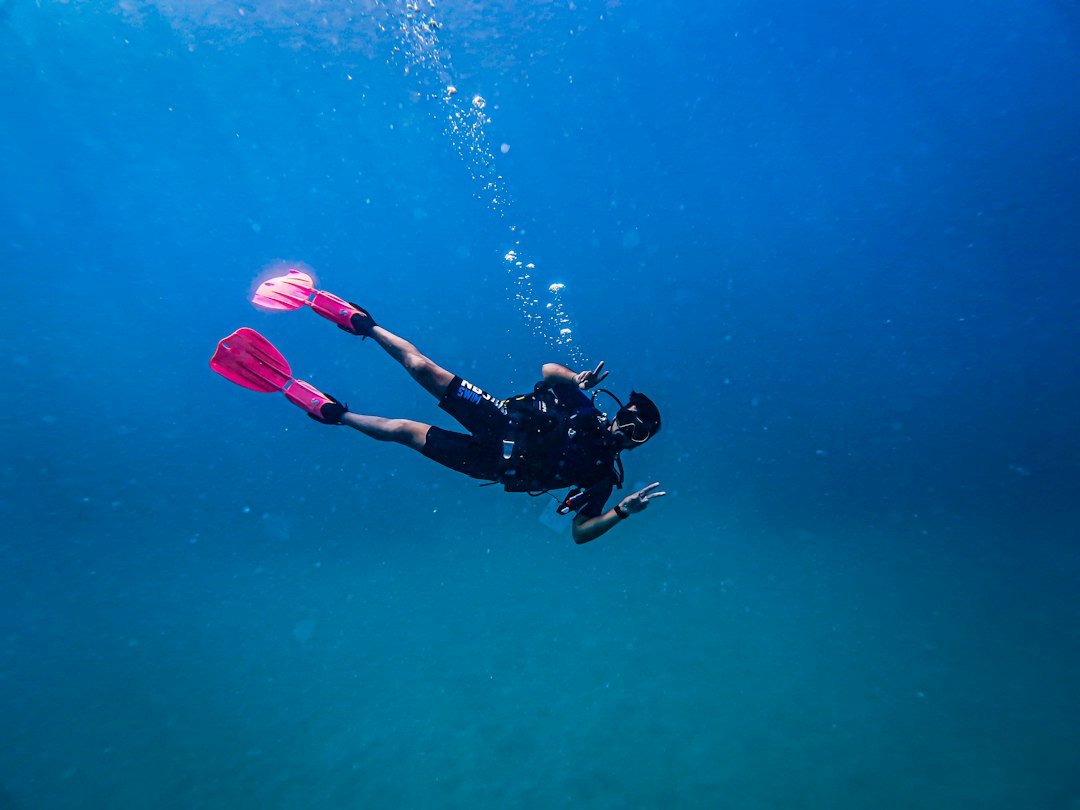
You are sitting on the boat in a wetsuit, watching other divers pull on masks while your stomach flips. How to prepare mentally for your first scuba dive starts with expecting that feeling instead of treating it as proof that you cannot do it. Nerves are normal. How to prepare mentally for your first scuba dive means breaking the day into small, familiar actions: listen, set up gear with help, breathe slowly, and tell your instructor what is on your mind.
How to prepare mentally for your first scuba dive before the day
Your mind has less room for worry when you know the basic shape of the dive. Keep it simple. Ask the dive operator or instructor where you will enter, whether you will start from shore or boat, how deep the planned dive is, and what the water may feel like. You do not need to memorize every detail, but knowing the plan removes the fear of an unknown schedule.
Read the course materials your training agency provides, then review only the core skills you expect to use. Focus on breathing from the regulator, clearing a mask, recovering a regulator, equalizing your ears, checking your air, and using hand signals. That is enough. Trying to cram every possible emergency procedure the night before can make a beginner feel less settled, especially when the instructor will teach and supervise the actual skills.
Pack early if you can. Lay out your swimsuit, towel, certification-course paperwork if needed, water, sunscreen suitable for your trip, and any personal equipment you have been asked to bring. A checklist helps. It prevents the small rush of wondering whether you forgot something, which can feel like dive anxiety even when the real issue is simply a missing towel or late departure.
Overcoming nerves without pretending they are not there
Trying to force yourself to feel fearless often backfires. Name the feeling instead. You might say, “I am excited, and I am nervous about the first descent,” rather than telling yourself that you should be completely calm. This gives your instructor useful information and turns a vague worry into one part of the plan.
Use a short breathing routine before gearing up. Breathe in gently for about four seconds, pause briefly, then breathe out slowly for about six seconds. Repeat this several times. The longer exhale can slow the rushed breathing pattern many people get when they are tense, and it also rehearses the steady, unhurried breathing you want once you have a regulator in your mouth.
Keep your attention on the next action. Not the whole dive. On a boat, that may mean fastening one strap, then listening to the briefing, then checking that you know the entry method. In the water, it may mean holding the line, taking three calm breaths, and making eye contact with your instructor before descending.
Avoid feeding the worry spiral with dramatic accident videos, deep-dive forums, or stories about conditions unlike your planned training site the night before. Skip them. Good training includes safety skills and clear limits, but your first open-water experience should be matched to your training progression, weather, and local conditions rather than somebody else’s difficult dive report.
Tell your instructor what you need
Be direct before the dive begins. Say that you are nervous, explain the specific part that concerns you, and ask how they want you to signal if you need a pause. This is useful. A certified instructor can adjust the pace within the course plan, review a skill again, or keep you close during the first few minutes underwater.
Agree on the most important signals before entry: OK, something is wrong, up, down, stop, and low on air. Practice them on land if you are unsure. Hand signals may seem basic, yet remembering them gives you a reliable way to communicate when talking is not possible.
Ask what happens if you decide not to continue. The answer should be clear: you can signal, stop the descent, and end or postpone a dive under your instructor’s direction. There is no prize for pushing through panic. A postponed training dive is usually more useful than a dive spent overwhelmed and unable to absorb the lesson.
Make the first minutes underwater easier
The first few breaths through a regulator can feel strange because the air is delivered differently than breathing normally on land. Go slowly. Put your face in shallow water, hold onto a stable point if your instructor directs it, and take deliberate breaths until the sound and sensation become ordinary.
Do not rush the descent. Descend only when you are comfortable, your instructor gives the go-ahead, and you can equalize your ears. Equalize early and often, before discomfort builds. If your ears hurt, cannot clear, or you feel unwell, signal your instructor and stop descending. Do not force equalization, and speak with a doctor before diving if you have congestion, ear problems, or other health concerns that may affect diving.
Look at something close. Sand ripples, a mooring line, or your instructor’s fins can give your eyes a stable reference while your body gets used to being buoyant. A busy reef can wait. Once your breathing settles, widen your view and notice the details around you.
Remember that calm divers are not necessarily people who never feel nervous. They are often people who respond to a concern early, use the agreed signal, and stay within the plan. That habit matters. It is much more realistic than expecting instant confidence on your first descent.
Use a simple mental script
A short script can interrupt racing thoughts because it gives your attention somewhere specific to go. Keep the words plain. Before entry, try: “I am trained for this step. I can breathe slowly. My instructor is close. I can stop if I need to.”
Underwater, reduce it further. “Breathe. Look. Signal.” Those words are not a substitute for training, but they can remind you to use the skills and support already available rather than reacting to a burst of anxiety.
Set one realistic goal for the dive. Your goal might be to complete the entry calmly, clear your mask once, or remain comfortable while kneeling in shallow water. Small wins count. Do not make “feel nothing” the goal, because emotions are not a skill test.
After the dive, build confidence accurately
Take a few minutes to debrief while the details are fresh. Ask yourself what made you tense, what helped, and what you would ask for next time. Write it down. You may find that the anticipation was harder than the actual dive, or that one practical issue, such as a tight mask strap, distracted you more than the underwater environment.
Share useful feedback with your instructor. If a slower descent, extra time at the surface, or a clearer explanation helped, say so. That information can help shape the next training session, and it reinforces that asking for support is part of responsible diving.
Confidence builds through repeated, manageable exposure. Take your next supervised dive when you are ready and conditions suit your training level. Keep your expectations grounded. A quiet, controlled dive where you communicate well is a success even if you still feel butterflies beforehand.
Frequently asked questions
Is it normal to feel anxious before a first scuba dive?
Yes, many beginners feel nervous before breathing underwater, managing unfamiliar equipment, or entering deeper water. It is common. Tell your certified instructor before the dive so they know to check in with you and can review the plan at a pace appropriate for your training.
What should I do if I panic underwater?
Stop, avoid bolting for the surface, and use the signal you practiced to get your instructor’s attention. Focus on slow breathing while you stay close to them. Your instructor can help you stabilize, assess whether you can continue, or end the dive safely. Never try to handle panic by holding your breath or making a rapid ascent.
Can I cancel my first dive if I am too nervous?
Yes. You can choose not to enter or stop a dive. Speak up early. Depending on the operator’s booking terms, a refund or rescheduling option may differ, so check the policy directly, but your physical and mental readiness matters more than completing a particular dive that day.
Will buying my own gear make me less nervous?
Familiar gear can feel reassuring after you have learned how it fits and works, but buying equipment is not required to manage first-dive nerves. Rental gear is common. Have a qualified professional help with fit, especially for a mask, wetsuit, BCD, and fins, and learn the equipment during certified training rather than relying on a new purchase to create confidence.
How do I know whether nerves mean I should not dive?
Ordinary pre-dive jitters often ease with a briefing, slow breathing, and instructor support. Severe distress, illness, ear or sinus trouble, chest symptoms, or any concern about your ability to follow instructions deserves a pause. Talk to your instructor, and consult a doctor for health questions before diving.
Related posts
This article is for general informational purposes only and is not dive training or medical advice. Always train with a certified instructor and consult a doctor before diving if you have any health concerns. Gear specs, pricing, site conditions, and operator schedules change, so verify current details directly with the manufacturer or dive operator.
Disclosure: This post may contain affiliate links. If you click through and make a purchase, we may earn a commission at no extra cost to you. We only recommend gear we’ve researched or genuinely believe in.