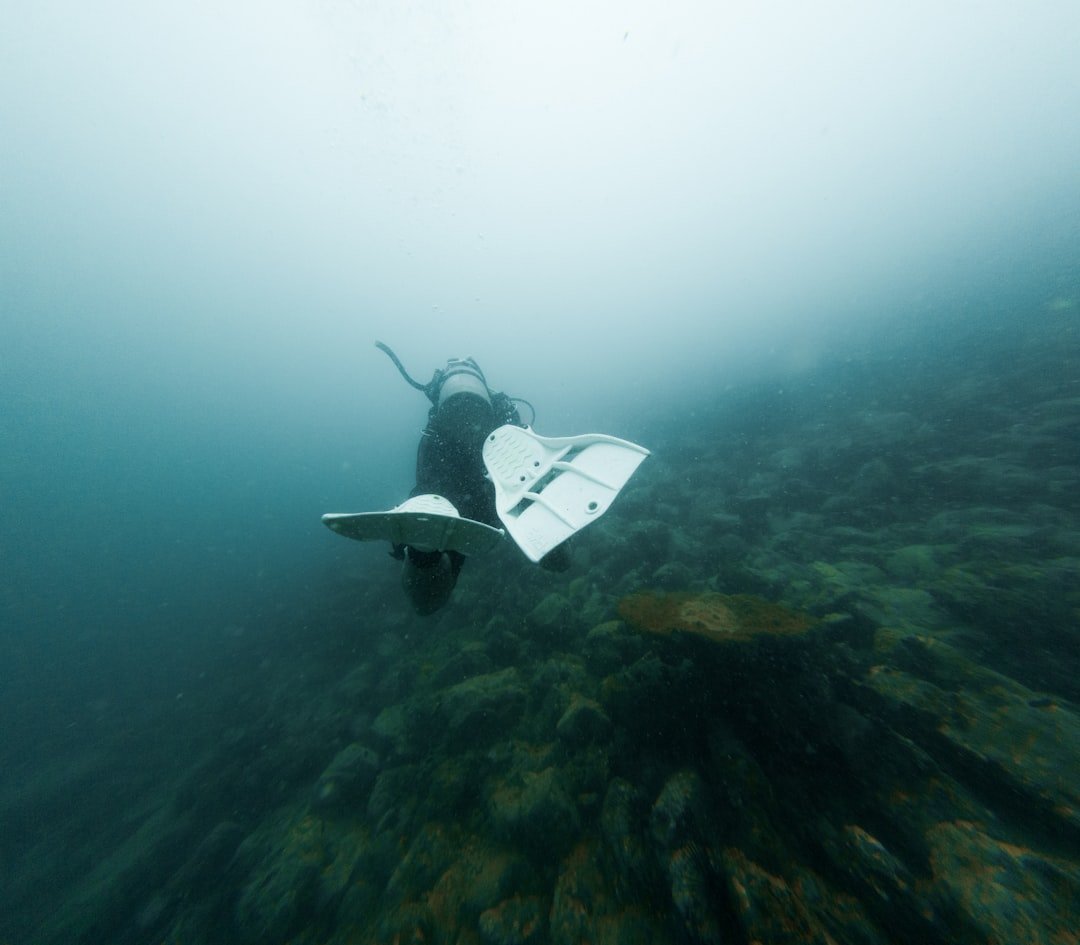
A common misconception is that freediving fins vs scuba fins is only a blade-length choice. That is wrong. The real difference is how each fin responds to your kick, how much leg load it asks for, and how manageable it feels while you carry a cylinder, hold a position, or fin against current. For the usual recreational diver who dives on scuba most weekends or holidays, freediving fins vs scuba fins has a clear answer: buy scuba fins. They are easier to control during the underwater tasks that fill a normal tank dive.
Freediving fins vs scuba fins at a glance
Scuba fins usually have a shorter blade, a stiffer structure near the foot pocket, and a shape made for repeated finning with a tank and buoyancy system. Buy scuba fins. They suit frog kicks, back kicks, small corrective strokes, and the occasional stronger kick when current picks up. A freediving fin has a much longer blade and often transfers more energy through a slower, wider flutter kick. It can move a diver efficiently through open water, but it takes room and good technique.
Neither design is automatically faster. They feel different. A long freediving blade can produce excellent distance per kick when the kick starts at the hips, stays controlled, and has enough water around the blade. That same blade can feel awkward when you are close to a reef, beside a ladder, inside a narrow entry channel, or trying to stop precisely above sand without touching it. Scuba fins give up some straight-line glide for easier control.
The intended dive changes the result. A diver making a relaxed 18 m or 60 ft reef dive with a camera, a buddy, and a tank rarely needs the long, sweeping kick that lets a freediving blade shine. That matters. On this kind of dive, a compact scuba fin usually causes less accidental contact with coral and takes less thought when you need to turn, hover, or hold position for a safety stop.
Freediving fins are not bad scuba fins. They are specialized tools with genuine advantages for apnea diving, surface swims, and divers who already use long blades well. Long blades punish sloppy kicks. If the knee bends heavily or the kick becomes a quick bicycle motion, much of the blade flex happens in the wrong place and the diver can feel leg fatigue without gaining useful propulsion.
Blade stiffness differences change the workload
Blade stiffness differences matter more than many first-time buyers expect. The label is not a standard. One brand’s medium blade can feel firmer than another brand’s hard blade because blade length, blade width, rails, material, foot pocket shape, and water temperature all affect how the fin flexes. Treat soft, medium, and hard as starting points, then try the actual fin if you can.
A softer blade starts to bend with less force. It suits lighter divers, divers with less leg strength, relaxed warm-water diving, and anyone who tends to get calf or hip fatigue in firm fins. Start soft. A soft scuba fin is often the forgiving choice for a new recreational diver because it still gives feedback when the kick becomes inefficient instead of demanding a hard push every time.
A firmer blade can move more water per controlled kick, especially when a diver has strong legs, carries a heavier cold-water setup, or expects steady current. It also asks more from the ankles, knees, hips, and lower back. Use this check.
- If you finish dives with burning calves, cramping feet, or sore knees, the blade may be too stiff, the pocket may fit poorly, or the kick may need work.
- If the fin bends easily but you struggle to hold position in mild current despite a calm, full kick, a somewhat firmer scuba fin may help.
- If your legs feel fine but the fin creates drag during turns and close reef work, blade length is likely the bigger issue than stiffness.
For freediving blades, stiffness is especially personal because the long blade amplifies each kick. A soft long blade can be efficient for a smaller diver with a smooth kick, while a hard blade may suit a larger diver who has developed the technique and needs more resistance. Do not buy hard simply because it sounds advanced. A blade that is too hard often shortens the kick, encourages knee bend, and turns a calm descent or ascent into a tiring effort.
Why scuba fins suit the common recreational case
The key difference is maneuverability under scuba equipment. This is the key. A tank shifts your center of mass and changes how you trim in the water, so the ability to make small fin inputs is useful all dive long. Paddle fins, split fins, and technical-style scuba fins feel different from each other, yet their shorter working length generally makes them simpler to use around a buddy, a reef wall, or a crowded boat ladder.
Most recreational dives are different from a clean open-water freedive line. You may descend through surge, swim over broken reef, pause to check pressure, adjust a mask, or use a few careful frog kicks to avoid silting a sandy bottom. A standard scuba fin handles these interruptions better because the blade is less likely to clip another diver or flex against an obstacle when you need to move in a tight space.
Travel is another practical factor. Long freediving fins often need a dedicated bag or a case long enough to protect the blades, and they can be inconvenient on small boats with limited deck space. That cost is real. Many scuba fins fit into normal checked luggage or can strap securely to the outside of a dive bag, although airline baggage rules and fees vary by route and carrier.
For the diver who owns one set of fins and primarily uses a cylinder, scuba fins are the sensible first purchase. They work for shore entries, boat dives, gentle drift dives, and pool practice without demanding a new movement pattern. Choose a model with a comfortable pocket and a blade stiffness you can use for an entire dive day. A fin that feels powerful for five minutes can be exhausting after two dives.
When freediving fins are the better choice
Freediving fins win when freediving is your main discipline and you spend most of your water time on breath-hold descents, line work, open-water surface swims, or snorkelling where efficient forward travel matters more than tight turns. They still have a place. Their long blades can give a smooth, economical feel when the diver uses a relaxed hip-driven flutter kick and has enough clearance around the feet.
They can also suit a scuba diver who regularly makes long surface swims at calm sites and already owns long blades for apnea sessions. That is a narrower case. The diver should accept the extra packing length, use care near other people and fragile bottom, and avoid treating a long blade as an automatic solution for current. Good positioning, an appropriate dive plan, and timely turn decisions matter more than fin length.
A freediving foot pocket is commonly full-foot, while many scuba fins use open heels with adjustable straps and booties. Use a matching foot pocket. Full-foot pockets can feel clean and direct in warm water, but they may be unsuitable over thick neoprene boots or when shore entries require sturdy footwear. Open-heel scuba fins are usually the more flexible choice for cold water and rocky entries.
Long fins can also make boat procedures clumsier. Put them on only when you have room, keep the tips clear of people, and ask the crew how they prefer divers to manage fins at the ladder. Stop if it hurts. Pain, repeated cramps, numbness, or joint discomfort are reasons to pause the dive activity and discuss fit and technique with a certified instructor; persistent symptoms deserve medical advice.
How to choose the right stiffness and fit
Do this before buying. Wear the same socks or booties you will actually dive in, then check both feet because many people have a slightly larger foot. Your toes should not curl hard inside a full-foot pocket, your heel should stay seated through a slow kick motion, and the pocket should not squeeze across the top of the foot. A snug pocket is useful. A painful pocket is not.
- Choose scuba fins first if tank diving is at least half of your planned water time, or if you want one pair for ordinary recreational dives.
- Pick a soft or medium stiffness unless you already know that a firmer blade suits your body and kicking style.
- Try a controlled flutter kick, frog kick, turn, and short reverse movement in a pool or calm confined water before committing to the fin.
- For freediving, choose blade stiffness after a certified freediving instructor has seen your technique or after a proper in-water trial with a knowledgeable fitter.
- Test the fins for at least 20 to 30 minutes if a demo is available, rather than judging them after a few pool lengths.
Do it dry as well. Flex the blade lightly by hand, inspect the rails and pocket junction, and make sure replacement straps or hardware are available for an open-heel model. Do not force a blade hard against the floor. Damage at the pocket or rail can change how a fin behaves, and small cracks are easier to spot before a trip than at a remote dive site.
Be conservative with stiffness. A lighter blade that you can kick cleanly through two dives is usually more useful than a stiff blade that feels impressive at the start and wrecks your legs later. Fin technique also has a large effect on air use and fatigue, but gear cannot replace coached practice. Ask a certified instructor for feedback if your knees bend excessively, your body rocks side to side, or you consistently struggle to stay level.
The bottom line
Choose scuba fins first for normal recreational scuba diving. Rent first if you can. A medium or softer scuba fin with the right pocket fit is the practical answer for most divers because it handles precise movement, varied entries, and ordinary tank-dive tasks without the bulk and technique demands of a long blade.
Choose freediving fins when breath-hold diving is the priority and you have space to use them well. The other choice is specific. Long blades can be excellent in their intended setting, but their length and stiffness do not make them an upgrade for every scuba diver. Match the fin to the dives you actually do, then get qualified coaching before changing your breath-hold or underwater technique.
Related posts
This article is for general informational purposes only and is not dive training or medical advice. Always train with a certified instructor and consult a doctor before diving if you have any health concerns. Gear specs, pricing, site conditions, and operator schedules change, so verify current details directly with the manufacturer or dive operator.
Disclosure: This post may contain affiliate links. If you click through and make a purchase, we may earn a commission at no extra cost to you. We only recommend gear we’ve researched or genuinely believe in.