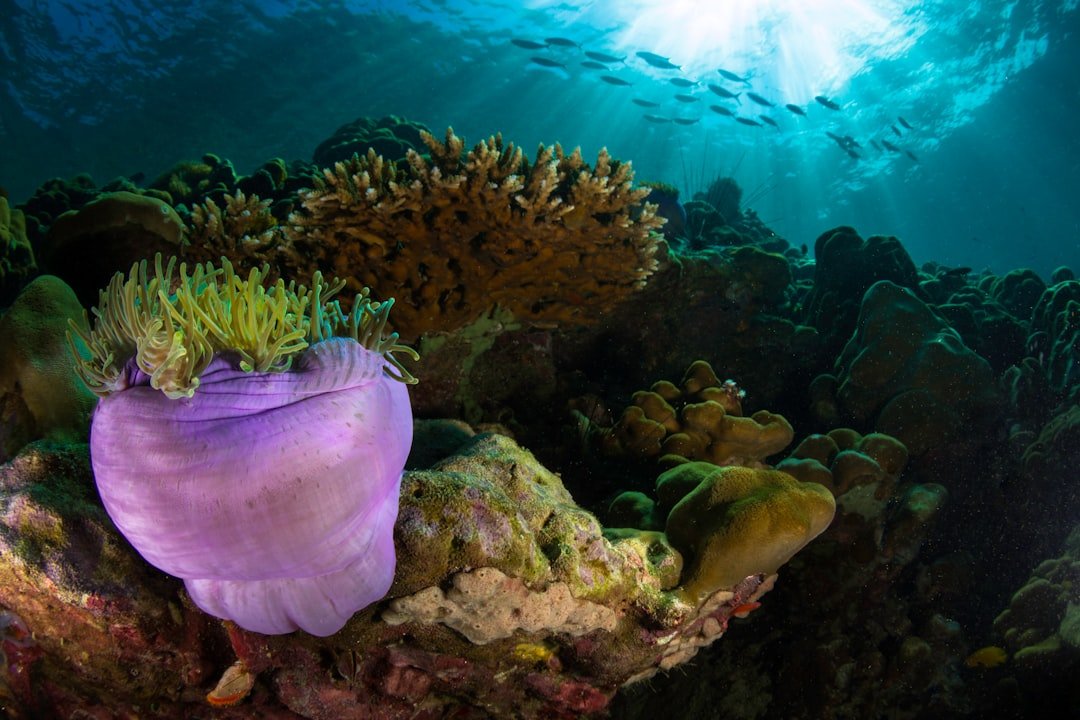
A common misconception is that the best diving spots for beginners in Thailand are the deepest, most famous sites. Usually, they are not. The best diving spots for beginners in Thailand are often sheltered bays and shallow reef sites where you can settle your breathing, sort your buoyancy, and still have plenty to look at. Start shallow.
Thailand has a lot of beginner-friendly diving, but the right island depends on the season, sea state, travel time, and what makes you uneasy underwater. A reef that feels relaxed in flat water can feel busy when wind, surge, or boat traffic picks up. Conditions decide everything. Ask an operator where they actually plan to dive that day, rather than booking around one named site you saw online.
Best diving spots for beginners in Thailand
Koh Tao is usually the easiest all-round choice for a newly certified diver, a refresher diver, or someone taking an entry-level course. The island has many dive operators, short journeys to several sites, and a broad choice of shallow bays. It can get busy. That said, a good operator can often schedule a quieter departure or choose a less crowded mooring when the weather allows.
Japanese Gardens, near Koh Nang Yuan, is commonly used for introductory and early training dives because much of the reef is relatively shallow and the sand patches give new divers room to practice buoyancy without hovering directly over coral. Expect reef fish, hard coral areas, and changing visibility. It is not a guaranteed aquarium. It is a sensible place to build comfort while still seeing a proper tropical reef.
Twins is another Koh Tao favorite, with coral-covered rock formations and sandy channels that make navigation feel less intimidating than a sheer wall or blue-water drop-off. The site can suit beginners when currents are mild and the group stays on an appropriate section. Listen closely. A familiar site is not automatically an easy site in every tide or weather pattern.
Racha Yai, south of Phuket, is a strong option for divers who want comfortable boat diving without committing to a liveaboard-style trip or a longer crossing. Bays such as Bungalow Bay and Siam Bay often have protected sections, sandy bottoms, and gradual reef slopes. The water can be forgiving. You may also encounter artificial structures or small wreck-like objects used as points of interest, but do not choose the site solely for those attractions.
For a first ocean dive or a post-certification confidence dive, Racha Yai often works best when your operator keeps the plan simple: a calm bay, a conservative depth, and enough time for a relaxed descent. I would prioritize a small group over a packed boat here, especially if mask clearing or ear equalization still takes concentration. There is no prize for rushing.
Koh Lipe has attractive shallow reef sites around the Tarutao National Marine Park area, and it can be a great fit for certified beginners who are comfortable on boats. Koh Jabang is often mentioned for its soft corals and colorful shallows, while sheltered local reefs may offer gentler profiles on the right day. The setting is more remote. Build in travel flexibility, because weather and boat schedules can change.
Koh Chang deserves a look if you want a quieter Gulf-side destination and do not need the biggest choice of dive centers. Several local reefs and small-island sites can suit beginners in calm conditions, with modest depths and marine life tucked around rocks and coral heads. Skip the HTMS Chang wreck as an early dive goal. Wreck penetration, deeper profiles, currents, and overhead environments need training and experience beyond a basic recreational start.
Phi Phi can provide good beginner diving, especially on sheltered reef sections around Bida islands or local bays when the sea is calm. However, it is less consistently mellow than Koh Tao or Racha Yai, since boat traffic, swell, and currents can affect the day. Choose the conditions, not the postcard. Tell the operator plainly if you have fewer than ten logged dives or have not dived in the past year.
| Area | Why it can suit beginners | What to check first |
|---|---|---|
| Koh Tao | Many shallow reefs, short trips, wide operator choice | Boat crowding, visibility, current at the planned site |
| Racha Yai near Phuket | Sheltered bays, sandy areas, gradual reef slopes | Wind forecast, transfer time, group size |
| Koh Lipe | Colorful shallow reefs and clear-water potential | Sea conditions, boat schedule, travel buffer |
| Koh Chang | Lower-key local reef dives in calm weather | Current conditions and site depth |
| Phi Phi | Varied reefs and convenient access from the area | Swell, current, and boat traffic |
How to choose shallow reef sites
For a beginner, “shallow” does not mean a site has no risk or no skill requirement. It usually means the operator can choose a profile where you have more bottom time, more daylight, and a less demanding ascent plan than on a deeper site. Your certified instructor should set training limits. If you are already certified, use the limits taught in your course and accept the guide’s decision when conditions are beyond your comfort level.
Look for a site with a sandy entry or sandy channels between coral sections. Sand gives you a place to kneel, adjust a fin strap, or repeat a skill without damaging coral, though you should still keep awareness of marine life. Avoid contact. Good buoyancy protects the reef and makes your dive less tiring.
A gentle slope is easier to manage than a steep wall for many new divers because depth changes are more obvious and the reef stays in view. A wall can be beautiful, but it asks you to watch depth, buoyancy, buddy position, and the blue water behind you at once. Keep the task load low. Early dives should leave mental space to enjoy the fish.
Current is the detail many booking pages underplay. Even a modest flow can make descents, mask clearing, and keeping close to a buddy feel much harder, particularly if you have only practiced in a pool or a calm bay. Ask this exact question before you pay: “Is the planned site suitable for a newly certified diver in today’s forecast?” A clear answer tells you more than a generic promise of an easy dive.
Visibility changes the experience too. Fifteen meters of visibility can feel spacious to one diver and exposed to another, while lower visibility may be fine if the group is small, the guide uses sensible spacing, and there is a recognizable reef reference. Do not chase a number. Choose a plan that lets you stay oriented and communicate comfortably with your buddy.
Season and trip planning
Thailand’s Gulf and Andaman coasts do not always have the same weather window, which is useful when one side has rougher conditions. Koh Tao and Koh Chang are on the Gulf side. Phuket, Racha Yai, Phi Phi, and Koh Lipe are on the Andaman side. Local weather patterns vary by year, so check current marine forecasts and ask operators what the last several days have been like.
Do not plan a first dive immediately after a long international flight if you can avoid it. Jet lag, dehydration, anxiety, and unfamiliar rental gear can make a simple dive feel needlessly difficult. Give yourself a buffer. A pool session, shore check, or easy first-day reef dive is a better start than forcing a demanding itinerary.
Budget for more than the advertised dive price. Depending on the operator, costs may be separate for park fees, rental equipment, hotel transfers, lunch, insurance, and a private guide. Prices vary by region. Get the total in writing before booking, then check what happens if weather cancels the trip or the operator changes the planned site.
A practical plan for your first Thailand dives
- Choose an area with several protected shallow reef sites, rather than one famous advanced site.
- Send the operator your certification level, last dive date, logged-dive estimate, and any skills you want to refresh.
- Ask for the next day’s likely sites, expected current, boat ride length, and maximum planned depth.
- Request a refresher if your last dive was a while ago. It is normal.
- On the boat, check mask fit, fin straps, weights, and how your computer or depth gauge works before the briefing ends.
- Make the first dive deliberately easy. If you are calm after that, decide whether a second dive still feels enjoyable.
A useful threshold is simple: if the briefing includes a current you have never dived in, a depth beyond your comfort range, or a task you do not understand, say so before entering the water. You can sit out a dive. A skipped dive costs less than turning an uncomfortable situation into a stressful one.
Rental gear deserves a quick personal check. Put the mask on without using the strap and inhale lightly through your nose to see whether it seals. Test both fin straps, make sure the BCD inflator and dump valves are explained, and ask where the alternate air source is routed. Small checks matter. If anything feels worn, poorly fitted, or confusing, ask for another setup.
What beginners should avoid booking blindly
Skip packages built around deep wrecks, strong current drift dives, long crossings in rough weather, or marine-life guarantees. Seeing a whale shark or manta can be memorable, but those encounters are never something an operator can promise responsibly. A calm reef dive with ordinary reef fish is a successful beginner dive. Enjoy the fundamentals first.
Be cautious with “all levels welcome” descriptions that do not state depth, current, or group arrangements. That phrase may simply mean the boat carries divers with different experience levels. Ask whether the guide will divide the group by certification and comfort, and whether beginners have their own guide. A small ratio can make a noticeable difference when you need help with descent control or equalization.
Never push through ear pain, breathing discomfort, panic, or repeated equalization trouble. Stop and signal. A certified instructor or dive professional can help assess the immediate diving situation, while a doctor should advise on health questions or persistent ear and sinus symptoms. The reef will still be there tomorrow.
Frequently asked questions
Is Koh Tao the best place in Thailand for a beginner course?
Koh Tao is often a practical choice because it has many operators and nearby shallow sites, but it is not automatically the best fit for every traveler. Phuket with Racha Yai access may suit someone who wants more resort infrastructure, while Koh Lipe may suit a diver who has extra travel time. Compare the actual course schedule and instructor-to-student ratio. Those details matter more than island popularity.
What depth should a beginner expect on shallow reef sites?
Many beginner-friendly reef dives can be planned in relatively shallow water, but the exact depth depends on your certification, local conditions, and the operator’s plan. Your instructor sets limits during training. Certified divers should follow their training, computer, buddy plan, and the briefing rather than treating a website depth as a target.
Do I need my own scuba gear for Thailand?
No. Most dive operators rent the core equipment, and renting is sensible if you are traveling light or still learning what fits you. A well-fitting personal mask can improve comfort, but test it before the trip if possible. Do not buy gear just because a destination package makes it sound necessary.
Can I dive in Thailand if I have not dived for several years?
Possibly, but book a refresher or supervised easy dive rather than jumping straight onto a multi-dive trip. Be honest about the gap. If you have medical concerns, recent illness, ear trouble, or uncertainty about fitness to dive, speak with a doctor and follow the operator’s policies before getting in the water.
Related posts
This article is for general informational purposes only and is not dive training or medical advice. Always train with a certified instructor and consult a doctor before diving if you have any health concerns. Gear specs, pricing, site conditions, and operator schedules change, so verify current details directly with the manufacturer or dive operator.
Disclosure: This post may contain affiliate links. If you click through and make a purchase, we may earn a commission at no extra cost to you. We only recommend gear we’ve researched or genuinely believe in.