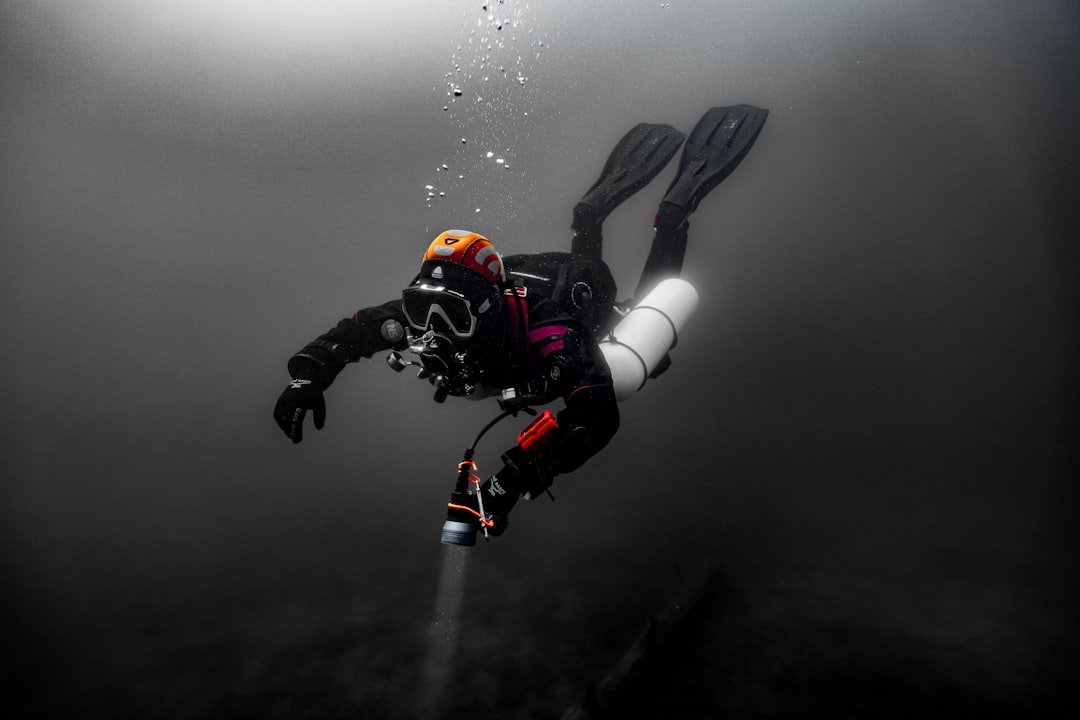
A common misconception is that the best regulator for cold water diving is simply the model with the highest advertised breathing performance. That is incomplete. For technical divers, the best regulator for cold water diving must also resist freezing during sustained high gas flow, fit a redundant gas plan, route cleanly on doubles or stages, and remain practical to service before a trip. A regulator that breathes beautifully in warm water can still be a poor choice if its first stage is exposed to ice-prone water or its hose layout fights the diver’s configuration.
Cold-water regulator selection starts with the actual dive plan. A 6°C UK quarry dive, a 2°C Great Lakes wreck, and a 10°C Norwegian fjord dive all create different demands. Depth matters too. Gas density rises quickly on deep air, trimix, and decompression dives, so a regulator needs to deliver gas predictably when breathing demand is high. Add long bottom times, overhead environments, task loading, scooter use, or a teammate sharing gas, and the margin for a mediocre setup gets smaller.
Best regulator for cold water diving starts with freeze resistance
A regulator can freeze when expanding gas causes a rapid temperature drop inside the first or second stage. Moisture, cold water, high flow rates, and repeated purge use all make the problem more likely. A freeflow is inconvenient in open water. In an overhead or during a deep decompression stop, it can become a serious gas-management problem.
The usual starting point is an environmentally sealed balanced diaphragm first stage. The environmental seal isolates the external diaphragm and spring area from water, silt, salt, and ice. The balancing system helps maintain intermediate pressure as cylinder pressure falls. This is why sealed diaphragm designs remain common in cold-water technical configurations.
That does not mean every piston first stage is unsuitable. Some piston regulators are designed and tested for cold-water use, and several have strong reputations among experienced cold-water divers. The practical point is to examine the complete manufacturer-rated system, including the first stage, second stage, environmental kit where applicable, and the conditions under which it is approved. Do not assume a cold-water rating transfers automatically when parts are mixed.
Look for documentation that states cold-water suitability under the applicable regional standard. In Europe, EN250 testing is commonly referenced. The details matter. A regulator approved for standard breathing performance is not necessarily evaluated for the same conditions as an octopus or long-hose donor configuration. Technical divers should read the manufacturer documentation rather than relying on a shop listing that says cold-water ready.
Choose a first stage that suits the configuration
For most cold-water technical diving, DIN is the sensible default. A DIN connection threads into the cylinder valve, protects the O-ring more effectively than a standard yoke arrangement, and is widely used with higher-pressure steel cylinders. DIN also tends to sit closer to the valve, which can help when managing first-stage clearance under bands, manifolds, and stage bottles.
A 300-bar DIN regulator is useful if local cylinders and filling infrastructure support it, but it does not improve breathing performance by itself. Many technical divers use 232-bar cylinders or fill well below the valve’s maximum rating. Verify the valve type, local fill practice, and the regulator’s rated working pressure before buying. A regulator and valve combination must be compatible as a system.
Port layout matters more than many buyers expect. A technical first stage needs enough low-pressure ports for the primary second stage, backup second stage, wing inflator, drysuit inflator, and possibly a transmitter. Stage and deco regulators need an appropriate hose and pressure gauge or transmitter arrangement too. Swivel turrets can make routing easier, though they add a moving component that requires normal inspection and service. Fixed-port first stages are simpler, but the best routing depends on the specific cylinder valves and harness setup.
For backmounted doubles, many divers use two independent first stages, one on each post. This supports valve shutdown drills and offers redundancy after a first-stage failure. A common configuration places the long-hose primary and wing inflator on one first stage, with the backup second stage and drysuit inflator on the other. Exact hose routing varies by training agency, local team practice, exposure protection, and whether the diver uses a rebreather or sidemount. Follow the system taught in a certified technical course rather than building a setup from internet diagrams alone.
Second-stage performance matters under load
A cold-water second stage needs more than a metal front cover or a large purge button. Useful design details include a heat-conductive metal valve housing or heat exchanger, an adjustable venturi control, and inhalation adjustment where the design provides it. These controls let the diver tune cracking effort and reduce accidental freeflow on the surface, during entries, or when a stage cylinder is clipped off.
An adjustable second stage is not automatically superior. It adds a control that needs correct setup, and some divers prefer a simpler non-adjustable backup for reliability and consistency. The important question is whether the second stage remains stable, easy to breathe, and manageable with thick gloves. Test the purge, venturi lever, and adjustment knob while wearing the gloves you actually dive.
Technical divers should also think about gas-sharing behavior. A long-hose primary is normally the regulator a teammate receives in an out-of-gas emergency, so it needs to breathe well at depth and under high demand. The necklace backup should be secure, predictable, and protected from unwanted freeflow. A matching pair of second stages can simplify servicing and spares, though some divers deliberately use a more compact backup model on the necklace.
Research-based regulator options for technical divers
Several regulator families appear regularly in cold-water technical discussions because their manufacturers offer sealed first stages, cold-water testing, DIN versions, and service support in major diving markets. The right choice still comes down to availability where the diver lives and travels. A capable regulator that cannot be serviced before an expedition is less appealing than a slightly less refined model with a reliable local technician.
| Regulator family | Why technical divers research it | Check before purchase |
|---|---|---|
| Apeks MTX-RC | Sealed diaphragm design, cold-water positioning, adjustable second stage, and port layouts often suited to twinset or stage use. | Confirm hose routing with the chosen first-stage orientation and compare local service pricing. |
| Apeks DST with XTX second stages | A long-established modular platform with an environmentally sealed first-stage option and broad parts familiarity in many technical communities. | Verify the exact DST version, environmental conversion, port arrangement, and technician support. |
| Scubapro MK25 EVO with G260 | A high-flow piston platform paired with a metal-bodied second stage. It is commonly researched for strong breathing performance and cold-water approval. | Confirm the appropriate cold-water configuration and service access, especially when travelling. |
| Mares 52X with Ultra or Atlas second stages | Balanced diaphragm options with cold-water-oriented versions and compact first-stage dimensions that may suit stage or sidemount planning. | Check the exact model’s environmental sealing, port count, and local technician familiarity. |
| Atomic M1 | A sealed first-stage system marketed for cold-water use, with corrosion-resistant materials and a premium price position. | Compare service intervals, parts access, and total ownership cost against locally supported alternatives. |
| Poseidon Xstream | A distinct design with a following among cold-water and technical divers, particularly where specialist support is established. | Check hose compatibility, setup requirements, and whether a qualified local service center is available. |
This is not a ranking. Each family has variants, and specifications can change between generations and regions. The options listed reflect manufacturer documentation on cold-water configurations and recurring discussion in technical-diving communities, rather than independent head-to-head testing. A manufacturer may also approve only certain first-stage and second-stage pairings for cold water. Read current manuals, ask an authorized service technician about support, and compare the exact SKU rather than buying based on an older forum recommendation.
Balanced diaphragm versus balanced piston
Balanced diaphragm first stages are the conservative choice for many cold-water technical divers because environmental sealing is straightforward and widely available. They are also common in rental fleets and expedition setups where contamination resistance matters. Their main advantage is not magic breathing performance. It is a design approach that keeps external water out of the spring chamber.
Balanced piston first stages can have excellent high-flow performance and a smooth breathing feel, especially at depth. Some are rated for cold water by their manufacturers. The trade-off is that buyers need to understand the model-specific anti-freeze system and follow the manufacturer’s maintenance instructions closely. In very cold water, do not make the decision based on a generic statement that piston regulators freeze or that diaphragm regulators cannot freeze. Either design can have problems if used outside its intended conditions or poorly maintained.
Plan for stages, decompression gas, and failure response
A technical diver often needs more than one regulator set. Bottom gas on doubles or sidemount cylinders requires a primary and backup breathing source. Each decompression or travel gas cylinder normally needs its own first stage, second stage, pressure gauge or transmitter, and appropriately routed hose. Cold-water reliability therefore becomes a system budget, not the cost of one premium first stage.
For stage and deco bottles, compact sealed diaphragm first stages are popular because they can route neatly and tolerate frequent handling in cold water. A clear, non-cluttered setup helps identify the correct regulator during a gas switch. Hose length, bolt-snap placement, neck bungee length, and cylinder-side routing should match the diver’s training standard. A regulator purchase is a poor time to improvise a new gas-switch procedure.
Redundancy does not eliminate the need for practice. A freeflowing regulator can drain a cylinder surprisingly fast, particularly at depth. Divers need training in valve shutdowns, regulator swaps, gas sharing, and team communication before applying those skills in cold conditions or overhead spaces. If a planned dive involves ice, penetration, deep decompression, or mixed gas, work with a certified instructor who teaches that environment and configuration.
Hoses, gauges, and small details that affect use
Cold water makes ordinary gear feel different. Rubber hoses stiffen less than some older plastic-coated hoses, while braided hoses can be light and flexible but may require more careful inspection for abrasion. There is no universal winner. Select hoses rated for the intended pressure and gas, then route them so they do not snag on valves, reels, or drysuit hardware.
A proper submersible pressure gauge remains a useful independent reference, even when a diver uses a transmitter. Technical divers often value a gauge because it gives direct cylinder pressure information without relying on battery status or computer pairing. Keep the gauge hose short enough to stay tidy but long enough to read easily. For stage bottles, choose a layout that does not trap the gauge behind the cylinder where it cannot be checked during a switch.
Check mouthpiece fit before committing to a regulator family. A poor mouthpiece can create jaw fatigue over a long dive, and a proprietary mouthpiece system may complicate replacement while travelling. Also test exhaust tee clearance with the mask and drysuit hood. A second stage that feels fine in a store can push bubbles into the face when worn with a thick hood or full-face exposure system.
Budget for ownership rather than the purchase price
Cold-water technical regulator systems are rarely cheap once every cylinder is included. A premium primary setup may cost several hundred to well over a thousand in local currency, depending on region and configuration. Add independent first stages for doubles, stage regulators, gauges, hoses, service kits, and annual or manufacturer-specified maintenance, and the total rises fast. Prices vary by region, retailer, currency, and time of purchase.
Service access is often the deciding factor between two otherwise suitable models. Ask local technicians which brands they are authorized to service, how long parts orders usually take, and whether they can work on the exact regulator model. Confirm the manufacturer’s stated service interval in the current manual. A regulator should be inspected after impacts, prolonged storage, flooding, unusual breathing behavior, or any suspected contamination, even if the routine service date has not arrived.
Used regulators can save money, but only when their history is known and the buyer budgets for a full inspection by an authorized technician. Avoid assuming that a regulator is ready because it purges and breathes at the surface. Internal corrosion, damaged seats, contaminated filters, and incorrect intermediate pressure are not always obvious to a buyer. For life-support equipment intended for cold technical dives, a documented service record has real value.
A practical buying decision
Start with the coldest water and most demanding gas-delivery scenario you realistically plan to dive in the next few years. Then choose a manufacturer-approved cold-water system with DIN availability, enough ports for the intended configuration, proven service support, and a second stage you can operate in gloves. Match the regulator to your training and team procedures before choosing cosmetic details or chasing a laboratory breathing number.
If two options meet those requirements, choose the one a local authorized technician can service quickly and that other divers in the planned expedition area can help troubleshoot. Familiarity has value when a trip is scheduled around short weather windows or remote logistics. The best purchase is usually the regulator system that stays reliable, correctly maintained, and consistent across every cylinder in the diver’s setup.
Before buying, check: 1) the exact first-stage and second-stage pairing is manufacturer-approved for the coldest water planned; 2) DIN connection, working pressure, and cylinder valves are compatible; 3) port layout and hose routing match the trained configuration; 4) the controls can be operated while wearing the intended gloves; and 5) an authorized technician can service the exact model before trips.
Related posts
This article is for general informational purposes only and is not dive training or medical advice. Always train with a certified instructor and consult a doctor before diving if you have any health concerns. Gear specs, pricing, site conditions, and operator schedules change, so verify current details directly with the manufacturer or dive operator.
Disclosure: This post may contain affiliate links. If you click through and make a purchase, we may earn a commission at no extra cost to you. We only recommend gear we’ve researched or genuinely believe in.