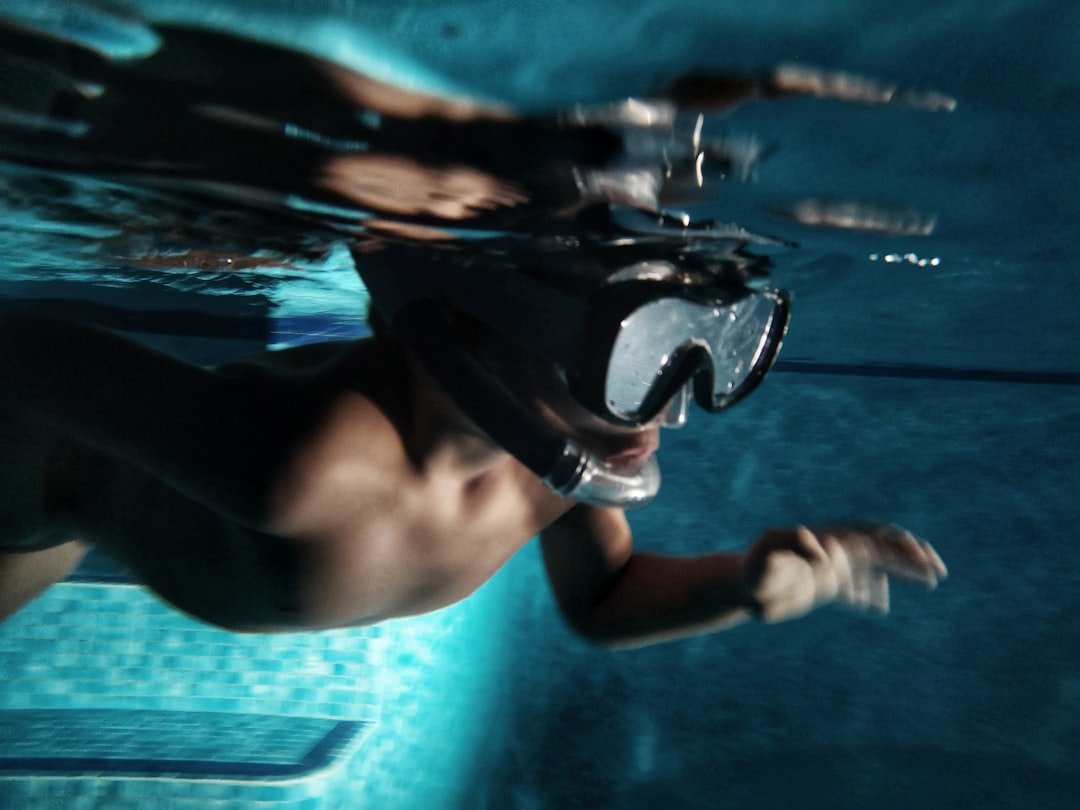
A common misconception is that the best scuba mask for small faces is simply the smallest model available. That is not how a no-leaking fit works. A compact mask with a skirt that is too narrow at the cheekbones, too long at the nose, or too shallow around the brow can leak worse than a slightly larger model. The best scuba mask for small faces has a soft skirt that follows your face without hard pressure, plus a frame shape that leaves room for your nose and does not push into your forehead.
Mask fit is personal. Face width matters, but so do cheekbone height, nose bridge shape, brow position, facial hair, and how much your expression changes when you put a regulator in. Two divers with the same glasses size can need completely different masks. That is why a proper dry fit before purchase is more useful than a review score or a manufacturer claim that a mask is “small fit.”
Best scuba mask for small faces starts with skirt shape
The silicone skirt does the real work. The lens shape, color, and brand matter after the skirt seals. For smaller or narrower faces, look closely at the upper skirt and the lower edge under the nose. Those areas cause many persistent leaks.
A narrow face often needs a mask with a shorter left-to-right sealing area, especially across the upper cheeks. A skirt that extends far beyond the cheekbone can fold when you equalize or smile around a mouthpiece. That fold creates a thin leak path. A smaller frame alone does not prevent this. Some compact masks still have wide skirts intended to fit a broad range of faces.
At the top of the mask, a low-profile skirt can help if a standard mask catches under your brow. Deep-set eyes create the opposite issue. You need enough internal room that your eyelashes do not brush the lenses and your brow does not distort the seal when you look upward.
The nose pocket deserves equal attention. If it is too tall or narrow, it can press your nostrils and make equalizing annoying. If it is too wide, the skirt may gap beside the nose. Pinching your nose through the pocket should feel easy while wearing thin gloves. A mask that seals in a shop but makes equalizing difficult is not a good purchase.
Choose soft silicone over a stiff “small” frame
Soft, supple silicone usually adapts better to small facial contours than a rigid skirt. It can also seal with less strap tension. Clear silicone often feels softer in many masks, though skirt thickness and design matter more than color. Black silicone reduces side light and can feel less distracting on sunny reefs, but it may feel closed-in for divers who are still getting comfortable underwater.
Very thin silicone skirts can seal beautifully, yet they need careful handling. They are easier to nick, and a twisted edge can leak quickly. Thicker skirts may last well and hold their shape, but a firm edge can leave pressure points on small cheeks. Neither style wins for everybody. Try the actual mask if possible.
What a no-leaking fit actually feels like
A good mask seal feels almost boring. You should not need to crank the strap down. With the strap loose, place the mask against your face and inhale gently through your nose. A suitable mask should stay in place for a moment without you holding it. Do not pull a hard vacuum. That can make a poor skirt appear to fit.
Then put the strap on and set it low on the back of your head, roughly around the crown rather than high near the top. The strap only supports the mask. It does not create the seal. If you have to tighten it until the skirt digs into your skin, the mask is probably the wrong shape or is sitting in the wrong position.
Check the seal while making normal diving expressions. Put a regulator mouthpiece in if the shop allows it, or simulate the mouth position. Smile slightly. Relax your jaw. Look down and up. Many masks seal perfectly with a neutral face, then leak beside the nose once the mouthpiece changes the shape of the upper lip and cheeks.
Hair is another common culprit. Move hair away from the skirt edge before judging the fit. Even one strand trapped at the temple can allow water in. If you have a moustache, a mask may still work well, but the upper-lip seal needs a more realistic test. A light trim where the skirt contacts the hair can help some divers. Petroleum-based products are a poor idea because they can damage silicone over time. If you need advice about skin products or irritation, check with the mask maker and a clinician where appropriate.
Mask styles worth researching for smaller faces
Several mask designs are regularly worth putting on a small-face shortlist, but none should be treated as an automatic no-leak answer. Fit comes first. Product lines also change, so confirm current availability, lens options, and replacement-part support with the manufacturer or a reputable dealer.
Scubapro Spectra Mini
The Scubapro Spectra Mini is commonly positioned as a compact version of the Spectra. Its smaller frame and dual-lens layout make it a sensible model to test if full-size framed masks feel too wide across your cheeks. Dual lenses can put the frame closer to the sides of your face than a large single-lens design, which some narrow-faced divers prefer.
The trade-off is field of view. A compact dual-lens mask can feel more enclosed than a broad single-lens mask, particularly if you are used to scanning reefs with your eyes rather than turning your head. The center frame bar may also sit in your view. It is rarely a problem once underwater, but it is noticeable during a dry fit.
Mares X-Vision Mid 2.0
The Mares X-Vision Mid 2.0 is another model marketed around a mid-size fit. It is worth researching if standard X-Vision-style masks feel large but ultra-compact masks pinch your nose. The shape aims for a middle ground, with a reasonably open viewing area and a skirt that may work on faces that are narrow without being especially short.
That middle-ground approach is the appeal and the limitation. Some truly petite divers may still find the skirt broad at the cheekbones. Others may find that it gives better nose and brow clearance than masks labeled “mini.” Try it with your regulator in your mouth before deciding.
Cressi Eyes Evolution
The Cressi Eyes Evolution has long been a common candidate for divers looking for a relatively compact dual-lens mask with angled lenses. Angled lenses can improve downward visibility, which is useful when checking releases, gauges, fin position, or an alternate second stage. The mask’s profile may also feel less bulky on a smaller face than a large panoramic model.
Angled-lens masks are not automatically lower volume. Internal space depends on the complete skirt and lens geometry. If easy clearing is a priority, compare the actual volume and how close the lenses sit to your face rather than assuming a slim-looking frame clears faster.
TUSA Freedom One and compact TUSA options
TUSA has several mask shapes, and its Freedom skirt concept is often discussed because the silicone has a flexible, varied-thickness design. The Freedom One is a single-lens model that may suit some smaller faces that do not get along with narrow dual-lens frames. A single lens gives a clean, open central view and removes the center bar.
The caution is width. Single-lens masks can have a broad skirt footprint even when the frame is low volume. A diver with a narrow face should test the upper cheek seal carefully. TUSA also has compact models in its range, so compare the skirt dimensions rather than choosing by the word “Freedom” alone.
Fourth Element Scout and other low-volume masks
The Fourth Element Scout is often researched by divers who want a compact, low-volume mask with a restrained frame shape. Low volume can make clearing feel easier because less water needs to be displaced, and a close lens position can improve peripheral awareness. Those benefits matter to some divers, especially in currents or on dives where mask clearing is frequent.
Low volume brings a fit trade-off. A mask that sits very close to the face may press on prominent brows or touch eyelashes. It can also feel tighter around the nose. Do not choose a low-volume model purely because you have a small face. Choose it if the skirt seals comfortably and the lens clearance works for your eyes.
Why masks leak even when the size seems right
Most leaks come from setup or skirt position, not a catastrophic mask failure. Before giving up on a new mask, check the simple causes. Make sure the skirt is not folded under itself. Confirm that the strap is flat and not twisted. Place the mask slightly higher or lower, because a few millimeters can change how the skirt sits beside the nose.
Overtightening is the classic mistake. Pulling the strap hard can deform soft silicone, especially around the temples and upper cheeks. Water then enters through the folded skirt edge. Back the strap off, reseat the mask, and let the water pressure help hold it against your face underwater.
A leak that occurs only when you look upward often points to the brow area. A leak that appears when you grin around the regulator often comes from the lower skirt near the nose or upper lip. Water entering at one temple can mean trapped hair, a hood edge, or a strap sitting too high. These patterns help narrow down whether the problem is fit or setup.
New mask lenses can fog because of manufacturing residue and normal condensation. Fogging is separate from leaking. Use a mask-safe defog product before diving, follow the manufacturer’s instructions for any initial lens preparation, and rinse thoroughly. Avoid aggressive cleaning methods unless the mask manufacturer specifically approves them. Tempered-glass lenses and skirt materials do not all respond the same way.
Lens choice and practical trade-offs
For many small faces, a two-lens mask is easier to fit because the frame can be narrower and the lenses can sit closer to the eyes. It is not a rule. A well-shaped single-lens mask can seal better and offers an uninterrupted view. A frameless design often packs flat and has a flexible skirt, but its soft structure can be harder to position consistently for some divers.
Clear lenses suit divers who want more ambient light and an open feel. Mirrored or tinted lenses reduce glare in bright conditions, but they can make darker water, wreck interiors, dusk dives, and overcast days feel dimmer. Prescription lenses are available for some dual-lens masks. If you need vision correction, check whether the model accepts optical lenses and whether the available diopter range matches your current prescription. An optometrist can advise on eye-health questions and suitable correction.
Color is mostly preference. Clear skirts admit side light. Black skirts reduce it. White and colored skirts can make a mask easier to identify on a crowded boat, but that is not a reason to accept a poor seal.
How to buy without wasting money
Start at a dive shop with several brands, even if you later compare prices online. Bring your regulator if the shop permits it. Wear the hood you use most often when buying for cold water, because hood thickness can affect strap position and how the skirt sits around your temples. If you dive warm water bareheaded, test that way too.
Spend a few minutes in each candidate, not ten seconds. Do the gentle inhale check. Fit the strap loosely. Move your jaw. Pinch your nose. Look around. Notice pressure points at the nose bridge and under the eyes. A mask that hurts on land is unlikely to improve after a 50-minute dive.
Price is not a reliable fit indicator. Basic tempered-glass masks can seal better than premium models if their skirt suits your face. Higher-priced masks may offer better buckles, softer silicone, optical-lens compatibility, or replacement parts. Those are useful benefits, but none can compensate for a leaking skirt. Prices vary by region, so check current dealer pricing and warranty terms before buying.
If possible, use a retailer with a clear mask-return policy. Water use, defog treatment, and lens preparation can affect whether a mask is returnable, so read the policy before taking it on a dive trip. Keep your first few dives shallow and controlled while you learn how the mask behaves. Practice clearing and reseating it with a certified instructor if those skills are new or rusty.
The sensible shortlist
For a smaller face, begin with compact dual-lens masks such as the Scubapro Spectra Mini, Mares X-Vision Mid 2.0, and Cressi Eyes Evolution, then compare them against one low-volume option such as the Fourth Element Scout. Add a single-lens model like the TUSA Freedom One only if wide-angle visibility matters to you and its skirt stays flat across your cheeks.
The winning mask is the one that holds a light seal without a tight strap, leaves your eyelashes clear of the lens, lets you equalize easily, and stays comfortable with a regulator in place. Brand loyalty does not help at 18 metres. A clean seal does.
Related posts
This article is for general informational purposes only and is not dive training or medical advice. Always train with a certified instructor and consult a doctor before diving if you have any health concerns. Gear specs, pricing, site conditions, and operator schedules change, so verify current details directly with the manufacturer or dive operator.
Disclosure: This post may contain affiliate links. If you click through and make a purchase, we may earn a commission at no extra cost to you. We only recommend gear we’ve researched or genuinely believe in.