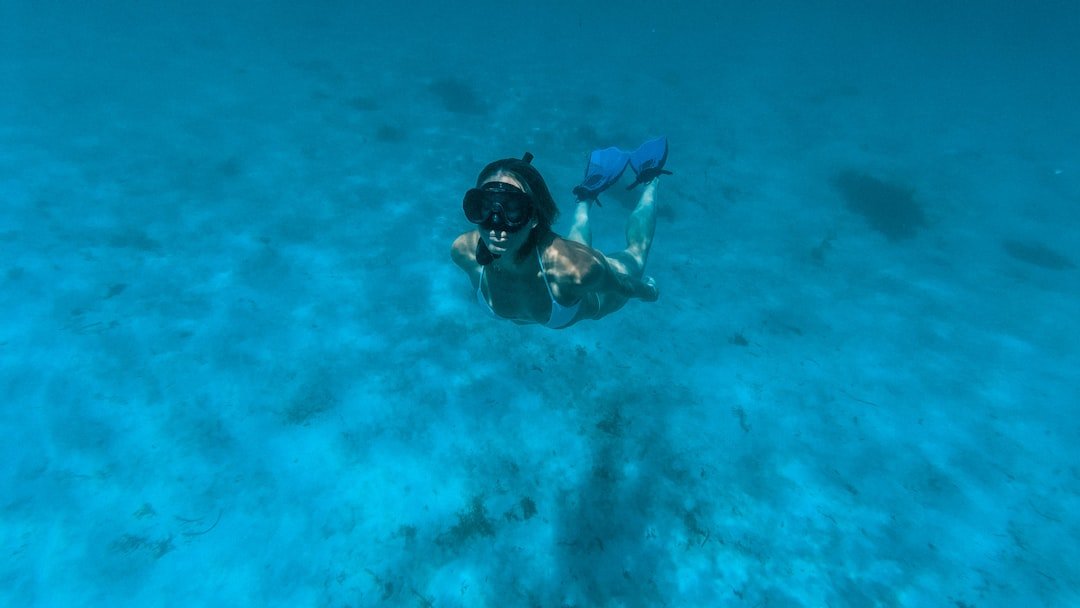
To clear water from mask while scuba diving, keep the mask on, look slightly upward, press the top frame or upper rim gently against your forehead, and breathe out slowly through your nose. The air pushes water out under the bottom skirt. This skill feels odd at first. Learning how to clear water from mask in controlled water with a certified instructor makes it far less stressful before you need it on a real dive.
A mask will occasionally leak. It happens. A strand of hair, an uneven skirt, a smile, or a loose strap can let in a small trickle. Clearing it is not about blowing hard or rushing the process. It is a calm buoyancy-and-breathing skill that lets you stay underwater without ending a dive over a little water around your eyes.
How to clear water from mask safely
Start with a stable position and a working regulator in your mouth. Breathe normally. If you are kneeling in shallow water during training, settle your knees and keep your torso upright. If you are hovering, pause finning, establish neutral buoyancy as best you can, and stay close to your buddy or an instructor.
Do not take out your regulator to clear a mask. Keep it in. Your regulator is your breathing source, and mask clearing only needs a controlled exhale through your nose. If water makes you cough or you feel panicked, signal your buddy, stop the drill, and return to the surface with your buddy or instructor following normal training procedures.
Water on your face can trigger a fast stress response, particularly during early pool sessions. That is normal. The useful response is to stop moving, inhale slowly through the regulator, and focus on one exhale at a time. A mask clear takes only a few breaths when the setup is right, but there is no prize for doing it quickly.
Step by step for beginners
- Stop and get stable. Hold a steady position, face your buddy or instructor if practical, and keep breathing from your regulator. Slow down.
- Look slightly upward. You do not need to crane your neck back. Just raise your chin enough that the lower edge of the mask is the lowest point, where water can escape.
- Hold the top of the mask. Put fingertips or the flat of one hand across the upper frame near your forehead. Apply light, even pressure. Do not mash the mask into your face.
- Keep the bottom edge free. The lower skirt needs a small path for water to leave. Do not press the bottom of the mask shut with your other hand.
- Exhale through your nose. Begin a slow, steady exhale while looking upward. Nose air enters the mask and displaces the water through the lower skirt.
- Repeat if needed. Take a normal breath from the regulator, then give another gentle nose exhale. Most partial floods clear in one or two cycles.
- Check the seal. Look forward, relax your face, and confirm the leak has stopped. If water keeps entering, find the cause before continuing.
The key is steady pressure, not force. Blow too hard and you may create bubbles, lose your trim, or tense your face until the skirt leaks again. A modest exhale is enough because air naturally rises inside the mask and sends water toward the open lower edge.
Try this in a pool first. Ask your certified instructor to watch your body position and hand placement, since a small correction can make the skill suddenly work. Do not practice mask flooding alone, especially in open water or at depth.
Clearing a small leak
A small leak usually collects at the bottom of the lens or around one cheek. You do not need to wait until the mask is half full. Clear it early, before the water distracts you or makes you rub at the mask.
For a small leak, keep your head level or only slightly raised, press the upper frame, and exhale through your nose for about one to two seconds. That is often enough. Then release the frame, breathe normally, and see whether more water enters.
If the leak returns immediately, do not keep clearing it every thirty seconds without checking the fit. Look for hair under the silicone skirt, a hood edge trapped under the seal, or a strap sitting too low on the back of your head. A mask strap should hold the mask in place, not squeeze it hard against your face.
Clearing a fully flooded mask
A full flood can look intimidating because both lenses are covered, but the basic method stays the same. Stay calm. Your regulator still gives you air, and your mask does not need to be dry before you can breathe.
First, make sure the mask is seated correctly on your face with the nose pocket in place. Tilt your head slightly up. Press the upper frame firmly but gently, then exhale through your nose in a slow stream while keeping the bottom skirt unsealed enough for water to leave.
A full mask may take two or three breath cycles. That is fine. Inhale through your regulator, exhale through your nose, and keep the top seal held in place. If you cannot see clearly during the process, focus on your breathing rhythm and your physical contact with the mask rather than trying to force a fast clear.
Some divers instinctively lift the bottom of the mask to dump water. Avoid that. Lifting the lower skirt too far turns the mask into an open cup and can let in more water than your exhale can move out. The bottom needs a small exit path, while the top stays sealed.
Common mask-clearing mistakes
The most common mistake is pressing the entire mask against the face. That traps water inside. Press only the top section, leaving the lower edge available as the drain point.
Another mistake is looking down. Water will not drain uphill. A slight upward angle works better, and it is more comfortable than throwing your head far back.
Many beginners also try to blow through their mouth. Your mouth is occupied by the regulator, so this does not put air into the mask. Close the back of your throat enough to keep your regulator seal secure, then send air out through your nose.
A too-tight strap causes problems too. Silicone skirts seal through shape and light contact, not brute force. An overtightened strap can distort the skirt, leave pressure marks, and make leaks worse.
Finally, do not hold your breath while fiddling with the mask. Keep breathing. Regular, relaxed regulator breaths reduce stress and help you maintain control of buoyancy.
How to prevent water entering your mask
Prevention begins with fit. A suitable mask skirt rests evenly on bare skin around your eyes and nose, with no hair or hood material under the sealing edge. Facial hair can make a perfect seal harder, especially under the nostrils. Some divers find a properly trimmed moustache helps, but fit varies by face.
Before entering the water, place the mask gently on your face without using the strap and inhale lightly through your nose. A mask that stays in place briefly may be a promising fit. This is only a basic shop check, though. It does not guarantee comfort or a leak-free seal during an actual dive.
Position the strap around the widest part of the back of your head, usually above the ears rather than low near the neck. Keep it flat. Check that hair is swept clear of the skirt and that the mask sits level, with the nose pocket centered.
If you use a new mask, follow the manufacturer’s care guidance before diving it. Some new masks may fog more easily until cleaned and prepared correctly. Fog is different from flooding, but poor visibility can make a minor leak feel more urgent than it is.
Practice progression that builds confidence
Build this skill in stages. Start in shallow, calm water where you can stand or kneel, with a certified instructor present. First let in a few drops at the bottom of the mask, clear them, and repeat until the motion feels routine.
Next, let in enough water to cover the lower part of the lens. Clear it with one controlled nose exhale. Then progress to a half-full mask and finally a fully flooded mask only when you are comfortable with the earlier steps.
Practice while stationary before trying it in a hover. Keep the conditions easy. A current, cold water, surge, task loading, or poor visibility can make a simple drill more demanding, which is why formal training starts in a controlled environment.
Use a simple reset if you feel overwhelmed: stop, breathe slowly through the regulator, signal your buddy or instructor, and take a moment before another attempt. If you are unable to clear the mask or feel your anxiety rising, end the practice and get assistance. There is no shame in that decision.
When to pause the dive
A one-off leak is usually manageable once you know the technique. Repeated flooding is different. Pause and address it if the mask will not reseal, if a broken strap or torn skirt is involved, or if water entry prevents you from seeing your gauges, buddy, or surroundings.
Signal your buddy and follow the plan you learned in training. Ascend only at the appropriate controlled rate with your buddy, make any required safety stop when conditions and your gas supply allow, and do not rush to the surface because of a mask problem alone. If you have eye pain, sinus pain, ear trouble, or any health concern related to diving, stop diving and seek advice from a doctor familiar with dive medicine.
The practical goal is simple. Keep breathing, hold the upper mask seal, look a little up, and exhale through your nose until the water leaves under the lower skirt. Practice that sequence under supervision until it feels boring. Boring is good underwater.
Related posts
This article is for general informational purposes only and is not dive training or medical advice. Always train with a certified instructor and consult a doctor before diving if you have any health concerns. Gear specs, pricing, site conditions, and operator schedules change, so verify current details directly with the manufacturer or dive operator.
Disclosure: This post may contain affiliate links. If you click through and make a purchase, we may earn a commission at no extra cost to you. We only recommend gear we’ve researched or genuinely believe in.